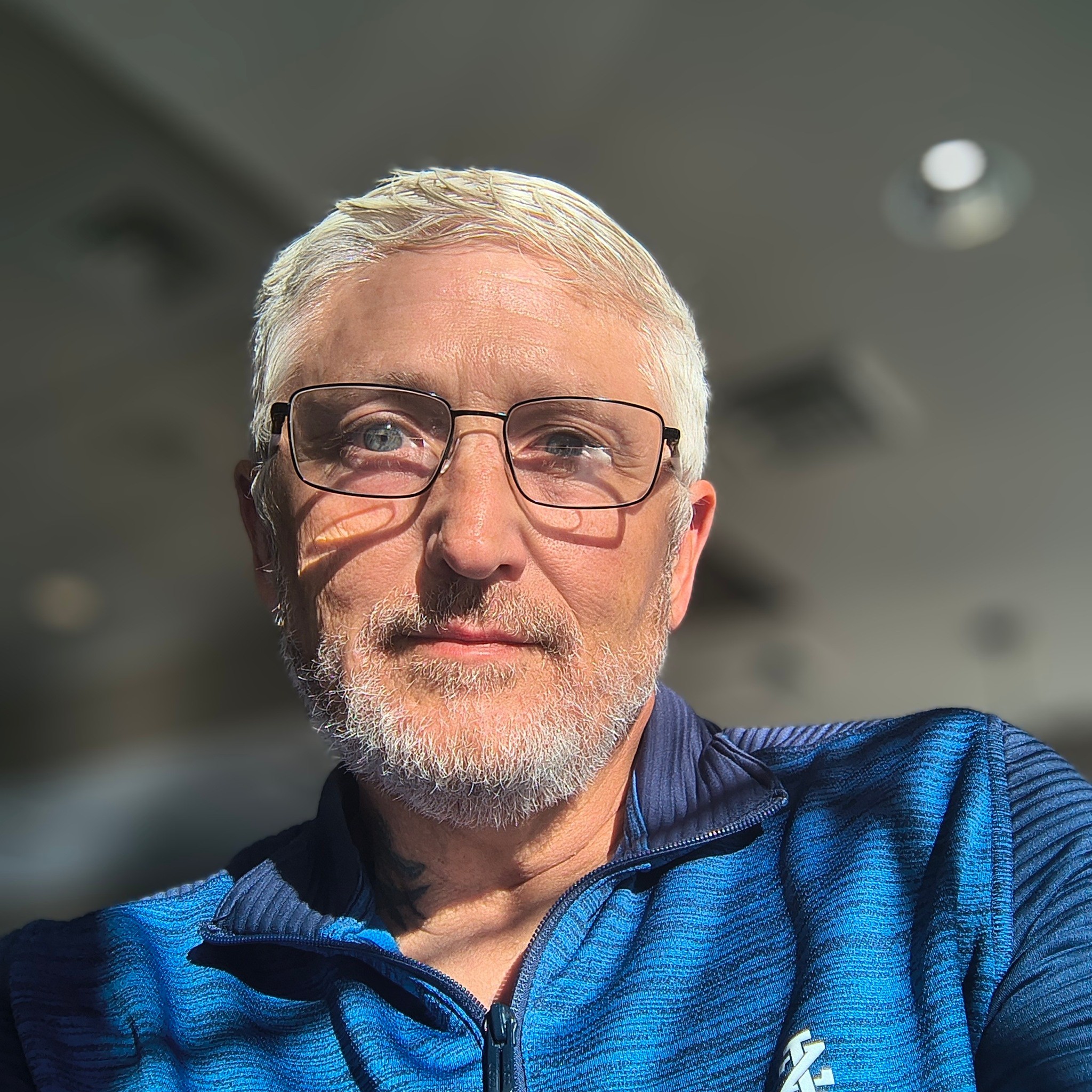
Call Me Dennis… Part Two

I tell you, on the day of judgment people will give account for every careless word they speak, for by your words you will be justified, and by your words you will be condemned. (Matt. 12:36,37)

Grace Fellowship (Church) is well known for being spiritually abusive. There are countless stories and evidence of this, provided by scores of witnesses. Dennis is one more in a long line of them. Below, I present supporting evidence of the abuse Dennis received. It is my hope and desire that those who are still at the church will read this, be as disgusted as I am, and actually do something about it. LEAVE! 

The direct quotes from leadership that I obtained through Dennis’s messages are revealing. They show that the pattern described below is real. It’s not just a random occurrence. Patterns of “joking” are not unusual at this place. Words can be destructive, hurtful, and damaging, and that is what this pattern shows.

Above all, it’s biblical to expose evil deeds. And that is what I seek to prove. Over several months, Dennis describes repeated emotional harm, coercive control, humiliation, spiritual manipulation, and psychological distress connected to the church’s leaders.

I hope you find these abuses as shocking as I do. Each is taken from a long series of messages I had with Dennis for almost two months. I have organized them in different categories and summarized the behaviors in an easy-to-follow format.

1. Abusive and Degrading Behaviors

Dennis repeatedly reports being called:

  • “Retard”
  • “Moron”
  • “Water boy”
  • “Rain Man”

These terms were used:

  • Publicly and privately
  • By leadership figures
  • In group settings where others laughed

When Dennis attempted to explain that these words were traumatic due to lifelong bullying and abuse, his concerns were dismissed or mocked.


Bullying Disguised as Humor or “Toughening Up”

  • Leaders and members laughed when Dennis joined in self-degrading jokes to cope.
  • He was told bullying “doesn’t exist.”
  • Hurtful behavior was reframed as:
    • “Iron sharpens iron”
    • “That’s how men talk”
    • “You’re being feminine for being hurt”

This normalized humiliation as spiritual growth.


2. Patterns of Coercive Control

Excessive Monitoring of Personal Life

Leadership repeatedly:

  • Questioned where Dennis was if he missed church or events
  • Demanded explanations for absences
  • Contacted him persistently by text and phone
  • Pressured him to answer calls immediately—even at work or late at night

Missing a single meeting triggered interrogation and accusations of sin or pride.


Control Over Time and Behavior

Dennis was expected to attend:

  • Sunday services (often twice)
  • Wednesday services
  • Morning Bible studies
  • Men’s groups and extra gatherings

Declining even one event resulted in:

  • Guilt
  • Accusations of avoidance
  • Pressure to “repent”
  • Claims that the relationship was “shallow” if he did not comply

Attempts to Control Speech and Online Activity

  • Dennis was pressured to post only ESV Bible verses on Facebook.
  • Repeatedly told “I prefer you use ESV,” despite Dennis offering compromise.
  • Leadership insisted on authority over his personal social media.

Disagreement was treated as rebellion.


3. Spiritual Manipulation and Gaslighting

Misuse of Scripture

Bible verses were repeatedly used to:

  • Demand submission
  • Accuse Dennis of pride
  • Threaten church discipline
  • Frame disagreement as sin

Matthew 18 and Hebrews 10:25 were cited to enforce compliance rather than restoration.


Projection and Gaslighting

Leadership frequently:

  • Accused Dennis of being controlling while exerting control themselves
  • Claimed “no one is pressuring you” while relentlessly pressuring him
  • Denied past statements or deleted texts
  • Reframed Dennis’s distress as immaturity or sin

Dennis was told:

  • He was “not a victim”
  • His reactions were prideful
  • His autism should not affect behavior
  • Emotional pain was irrelevant

4. Exploitation of Vulnerability

Dennis was particularly vulnerable due to:

  • Autism and PTSD
  • Past lifelong bullying
  • Seizure disorder
  • Financial instability
  • Dependence on church help for paperwork, housing, and income access

Leadership:

  • Assisted him financially and administratively
  • Then referenced that help as leverage (“See, I got you more money”)
  • Implied obligation and increased expectations afterward

This created fear that leaving or speaking up would result in homelessness or loss of support.


5. Emotional and Psychological Harm

Dennis reports:

  • Chronic anxiety and fear
  • Depression and emotional exhaustion
  • Crying frequently
  • Feeling “trapped” even after leaving
  • Trauma responses and shutdown when yelled at
  • PTSD triggers from being shouted down by multiple leaders
  • Inability to think clearly during confrontations

He described the environment as:

  • “Like an abusive father who hits then hugs”
  • “Double-sided slaps followed by affection”
  • Constant fear of doing something wrong

6. Intimidation and Confrontation Tactics

Leadership behaviors included:

  • Yelling after others had left
  • Multiple elders confronting him simultaneously
  • Accusing him of lying while he was visibly overwhelmed
  • Demanding immediate compliance
  • Framing resistance as feminine, sinful, or rebellious

Dennis reports being told directly that:

“Your feelings do not matter.”


7. Authoritarian Leadership Culture

Leadership Characteristics Identified

  • Absolute authority with no accountability
  • No external oversight
  • Leaders’ preferences treated as God’s will
  • Emotional dominance presented as masculinity
  • Anger excused as spiritual zeal

Disagreement was labeled:

  • Pride
  • Rebellion
  • Immaturity
  • Lack of submission

8. Love Bombing Followed by Withdrawal

Early involvement included:

  • Intense attention
  • Constant affirmation
  • Immediate help
  • Praise and encouragement

Over time, this shifted into:

  • Surveillance
  • Criticism
  • Control
  • Conditional approval
  • Withdrawal of warmth when compliance decreased

Affection was tied directly to obedience.


9. Isolation and Fear of Exposure

Dennis was repeatedly warned—explicitly and implicitly—that:

  • Speaking critically would be divisive
  • Questioning leadership was dangerous
  • Leaving would harm him spiritually
  • Talking to outsiders was suspect

After leaving, members urged him to return while warning him not to speak negatively about leadership—reinforcing fear and guilt.


10. Post-Exit Trauma

After leaving, Dennis reported symptoms consistent with Religious Trauma Syndrome, including:

  • Persistent fear
  • Feeling mentally trapped
  • Guilt for resting or missing church
  • Difficulty trusting his own decisions
  • Emotional confusion
  • Lingering sense of control

He described feeling as though his “soul was still in the basement of the church.”


Conclusion

These conversations reflect a consistent and escalating pattern of emotional abuse, spiritual manipulation, coercive control, and psychological harm, particularly toward a vulnerable, disabled individual seeking safety and belonging. Nothing stated above is new for GFC and its leadership. These are consistent patterns wrapped in religious garb.

While outward religious language was consistently used, the lived experience described includes:

  • Fear rather than freedom
  • Control rather than care
  • Shame rather than restoration
  • Compliance rather than consent

The overall pattern aligns closely with spiritually abusive and cult-adjacent environments, even if not fitting every traditional definition of a cult.

Resources for further study on cults and high-demand religious groups.

  • Winell, M. (2011). Religious Trauma Syndrome.
  • Lalich, J. & Tobias, M. (2006). Take Back Your Life.
  • Hassan, S. (2015). Combating Cult Mind Control.
  • Herman, J. (1992). Trauma and Recovery.
  • American Psychiatric Association — Coercive Control Framework.
  • International Cultic Studies Association (ICSA).
  • Enroth, R. (1992). Churches That Abuse.
  • Kruger, M. (2022). Bully Pulpit.
  • DeGroat, C. (2020). When Narcissism Comes to Church.
  • Garrett, K. (2020). In the House of Friends.

Finally, I want to appeal to anyone still at Grace Fellowship. You all know Dennis. You have spent time with him. Although autistic, he is a highly intelligent man, and he was abused by you, whether directly or indirectly, through your approval of the leadership structure. Isn’t it time for this to stop? I say, it’s long past due. Stand up, do something about it. Enough is enough.

If you are a leader, it’s time to quit. You are not equipped, and you are certainly not qualified. I have no doubt that the pressure has been intense over the years, and I hope it only grows. You deserve it. But above all, you dishonor the God you claim to love and serve. He is not pleased by your behavior. The Scriptures show us this plainly, so you should stop pretending and give your people their freedom. Go get a job and go to a church as you examine yourself. Sit in the back and do not seek a leadership role.

Let’s confirm if you are first in the faith.

With all love and sincerity

Kevin Jandt

Mental Health and the Church

Sometimes, we can say or write things that strike a chord with people. That can be good or bad, but it can also be profitable in causing someone to think. This should always be the goal when approaching sensitive topics. Most often, I see people who have formed their opinions or come to their convictions are rarely convinced to move outside their box and consider other views. I’m this way with certain things, and I’m sure you are. Mental health and the church should not be at odds with one another, but often that is the case. Is there room for modern methods, such as psychology and neuroscience,[1] that still allow for the sufficiency of Scripture in counseling? I sure hope so.

Recently, a man I knew committed suicide, and it set off, in my mind, a discussion and a renewed interest in the topic of mental health. What is the role of mental health in the life of a Christian? The Christian church is always and consistently under attack from the outside but also from the inside. Paul said that from within, savage wolves would arise (Acts 20:29-30). Mental health, similarly, arises from within. The secret thoughts of the mind, and those that come from a broken mind, can be the undoing or that which causes the greatest damage.

I also believe the church is ill-equipped to handle many of these challenges. I don’t mean all are ill-equipped, nor do I mean to say, “I am equipped.” Like many pastors and Seminary students, I’ve taken a semester of counseling. I even thought I would pursue this more, but I have not, at least for now. I’ve seen the lopsidedness of many, especially in the Reformed movement. I also want to acknowledge that I’m grateful for the course I took that sought to balance Christian and secular counseling.

Allow me to illustrate using examples from two well-known Christian counselors.

In his book, The Christian Counselor’s Manual – The Practice of Nouthetic Counseling, Jay Adams writes,

“Counseling, therefore, must be understood and conducted as a spiritual battle. The counselor must consider himself a solider of Christ engaged in spiritual warfare when counseling. For that battle the ‘full armour of God’ alone is sufficient. Unbelieving counselors not only lack such equipment, but moreover, obviously are totally ignorant of the true nature of this situation. In Fact, since they are soldiers in the army of Satan, they are on the other side and, therefore, hardly can be relied upon to free Christian counselees from Satan’s grips.” [2]

Adams, footnotes this quote and says, “Not that God, in His amazing providence, at times does not use unsaved persons to do just that and thus ‘make the wrath of man to praise Him.’ But, as faithful Christians, our responsibility is to turn to Christian counselors and not to test the Lord (Galatians 6:1). See The Big Umbrella, pp. 146-155.

The quotation says a lot about Adams’s philosophy of counseling, and while I find the statement problematic on several levels, which I hope becomes clear through this article, he is not completely wrong. Yes, an unbeliever will not understand the spiritual nature of the battle, and their goal is not to have the counselee in right relationship with God, but are they unequipped to understand situations and offer valuable assistance? Are they ignorant to counsel someone who is hurting? Adams seems to hedge his bet with the footnote, and perhaps there is some hesitation within his thought process.

Can we take his words and apply them to other fields of study? What about modern medicine, say, a heart surgeon? Is he unequipped to perform an open-heart surgery because he is not a believer? Why does the Christian look at those who study the brain, in relationship to neuroscience or childhood development or modern psychology, as voodoo science when it comes to helping those in need, even Christian patients? I realize I’m painting with a wide brush by including different fields of study. Still, these have all too often been viewed as illegitimate by many Christians. Not only illegitimate but often ridiculed.

I want to clarify that I’m not discounting the authority or sufficiency of Scripture, but Scripture does not speak to every single issue and offers solutions to all possible scenarios. For example, what about Alzheimer’s and Dementia, or brain injuries that can occur through a car accident or other severe damage? What about childhood trauma or spiritual abuse? These are different categories and can include not only physical damage but also spiritual damage.

Edward Welch wrote in his book Blame It on the Brain? – Distinguishing Chemical Imbalances, Brain Disorders, and Disobedience

I have found that a rudimentary understanding of brain functioning can be very useful when it comes to understanding and helping others. For example, a knowledge of brain function can help us answer questions about chemical imbalances and the appropriateness of psychiatric medicines. It can help us understand people whose ability to learn and think are different from our own. And it can also help us distinguish between physical and spiritual problems.”[3]

Welch’s understanding and writing include these important categories, yet he doesn’t excuse sin. In my experience, I’ve encountered a few people who are disciples of Adams, and they were not nearly as gracious as what is required for good counseling. I also do not want to throw the baby out with the bathwater. Adams has written many books on counseling, and they contain helpful and useful information for applying biblical truth to situations. Still, sadly, I see him held up as the standard bearer and his methods as gospel by some who lack empathy.

Developing discernment and having a heart of compassion combined with education, knowledge, and experience is the best guide to appropriate counseling. Rarely are things one size fits all. Welch shows balance. “Because theology is the lens through which Christians interpret all research, and it is essential that our lenses be clear and accurate.” [4] Welch never dismisses the biblical view of brain research but instead applies it where and when necessary while still acknowledging the value of modern sciences and areas of study, such as “genetics, neurochemistry, and brain injury and disease.”[5]

What I’ve observed seems to be an overreaction to modern psychology, neuroscience, childhood development, and similar fields that many Christians label secular and dismiss any value they may hold. They take it to the extreme, and while I know there are extremes and bad practitioners in these fields, there are also bad actors in the Christian community who do more harm by outright rejecting these sciences. Things are rarely black or white.

I cannot hold your attention with the many categories involved, so let me mention depression as a general overview. Welch, quoting Martha Manning and William Styron, writes, “Depression has been called ‘a room in hell,’ a howling tempest in the brain.” Welch goes on to describe it like this, “When you listen to people describe their depression, you will hear two extremes. People will report that the pain is so intense that they want to die. Others will describe an emotional numbness in which they are already dead. Sometimes you will hear one person describe living with both extremes simultaneously.” [6]

The cause is not easy to determine, but it is real for the person suffering from depression. Welch once again describes this through the words of a friend, “A friend of mine wrote, ‘I am suicidal again. I have no energy or reason to fight. I am numb and tried all the things I know how to try. I know I won’t be able to function like this much longer. There is no one to talk to. I’m suffocating. I can think the best thoughts all day and I still feel like this. No one knows how badly I want to die. My thoughts are obsessive and won’t stop. They keep saying, ‘I want to die.’” [7]  

The cost of a misdiagnosis here can be deadly. When well-meaning or not-so-well-meaning pastors or counselors attempt to lump this all under the banner of sin, there are bound to be consequences. Offering the wrong counsel can have deadly effects. Here is the danger of relying strictly on a nouthetic counselor like Adams. We know David had depression, as did Paul, Elijah, and Jeremiah. And the well-known preacher Charles Spurgeon. The brain is a complex machine capable of all kinds of things we know little about.

While counseling should involve the Scriptures and the spiritual, I am hard-pressed to say medications, modern psychology, and brain science are sinful. I often say that if one needs counsel outside the church, seek one that is not hostile to the Bible or Christianity. The surface has been barely scratched on this topic. It is deep, wide, and complicated. I caution those involved in counseling to seek the wisdom from above but never discount the opportunities from those trained to understand the brain at a higher level. This does not call into question God’s word or His authority. It does not discount the value of speaking about spiritual things to spiritual people. The Bible is sufficient, but God has given us His common grace that extends to all of mankind, including scientific developments that greatly value human existence and real human problems.

Most importantly, no matter where you land on this topic, love must be the guiding principle in all we do. As mentioned above, many have formed strong opinions about this topic and the answers. What I don’t think you will find in the Scriptures is a clear command seeking help outside the church is sinful. It seems to me Jay Adams takes it that far, and I think that is a shame. If you believe it is sinful, how would you counsel or speak with someone who doesn’t share your view? Will harsh judgment and condemnation rule your spirit, or can you say with Paul without love, you are a noisy gong or a clanging cymbal? (1 Cor. 13:1).

Understanding and dealing with those who experience depression or other similar issues demands love and compassion. As Christians, we should be known for our compassion and empathy. Here are some examples of what not to say, and these are direct quotes from friends who struggle,

“Depression is just a sin. It means you don’t have enough faith.”

“What do you have to be depressed/anxious about? Isn’t your joy in the Lord?”

“Jesus was a man of many sorrows for you. Why would you want to hold onto what he took away?”

“Try harder to have more joy. You worry too much about being happy. Happiness is fleeting. Joy is in God. I mean, what are you saying to God when you complain?”

“You’re suicidal? I thought you were saved?”

Rather than being one of Job’s worthless counselors, start by being slow to speak and quick to listen. Be a friend and show empathy. Be gentle and kind in your answers, especially when you don’t understand or can’t relate. I want to leave you with a beautiful poem by my dear friend Todd Pearson. He has struggled with depression for many years. You will hear and feel his pain. Above all, may the Lord guide us in His wisdom and His love for those who suffer (2 Corinthians 3-11).

Ne’er Again the Light

…The nature of my soul is singular…
…There are darkened corners in recesses of my being…
…Shades of shadows are the depth of my rest…
…Darkness cloaks the guttural visceral reality of living…

…People speak of light but ne’er fathom perilous substance…
…Light of love…
…Luminescence of such amity…

…Yet, what of sleep…
…Slumber finds you in its arms in depths of darkness…
…Best reveries happen upon us in deep darkness embraced…
…Vast nebulous expanses ill lit mark the safest of our hours…

-Ne’er Again the Light-

…Hollowness of words uttered mark emptied mastery…
…Deity is luminosity…
… Sanctuary is sunlit existence…
…Veracity is brightness as lies lie in the twilight of betrayal…

…Heave your burdens out from the penumbra of self-isolation…
…Diurnal course brings sanctified sanctuaried healing of the pnuema…
…The best of intellect is bright…
…Yet the least of intellect is darkness…

…Embrace light to grasp at hope…
…The matter of very being is woven of strands of ascendent illumination…
…To dwell there is to persevere in the peace of the masses…

-Ne’er Again the Light-

…Yet truth rests betwixt the shadows…
…The one, say even I, that has only ever known dark…
…Must remain in its abiding shelter or know only pain…
… Conditioned to interweave solemn invulnerability with eclipse…

… Finding solace within the apportioned lot of one’s progenitor…
…Seizing upon the succor of the known…
… Shrinking instead from the light of inconceivable joy…

-Ne’er Again the Light-

… Had it been the best it would have been preferable…
… Better to have never known the consolation of light…
… Then to evermore dread its substance…

-Ne’er Again the Light-

…One dwells in the comfort of what is known…
… Branching as it were on the tenebrous existence of habitual tranquility…
…Amity of that arises from trepidation of experienced felicity…

… Preferable to the aching soul…
… To have never known such bliss…
… To have never clung to such joy…

… Then to have participated in facade of mocking reality…
…To have given attestation to such hope…
…That the burdened pnuema could ever behold…
…. such joy…

…No ne’er again the light…
-No-
-Ne’er again the light-


[1] I am using some of these terms somewhat synonymously, but neuroscience deals with the physical brain, whereas psychology deals with issues in the mind. https://www.psychologytoday.com/us/basics/neuroscience

[2] Jay E. Adams, The Christian Counselor’s Manual: The Practice of Nouthetic Counseling, (Grand Rapids, MI, Zondervan, 1973), 117.

[3] Edward T. Welch, Blame it on the brain?: Distinguishing chemical imbalances, brain disorders, and disobedience. (Phillipsburg, NJ, P & R Publishing, 1998), 12.

[4] Ibid., 15

[5] Ibid., 19

[6] Ibid., 116

[7] Ibid., 117