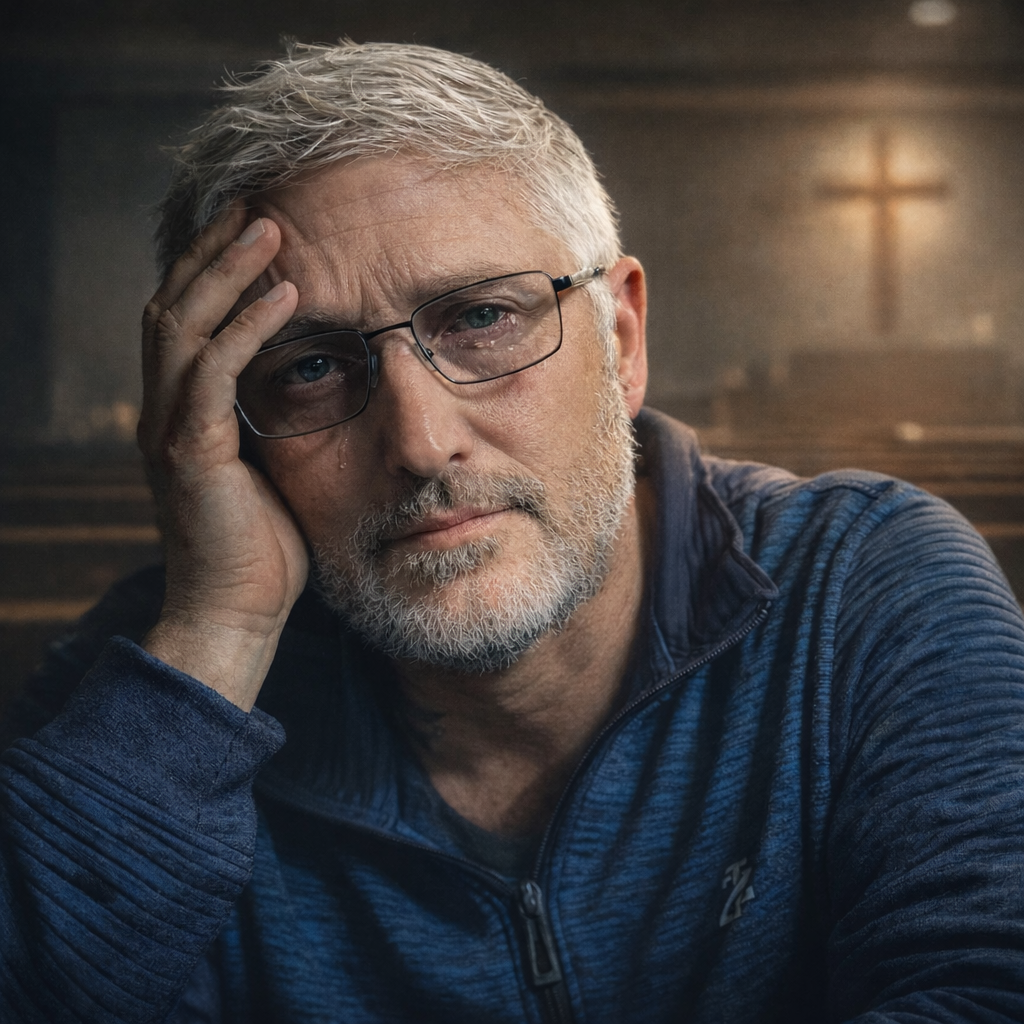
Faith Beyond Fear – A True Story

In the years since we left Grace Fellowship, I have consulted with many people regarding the topic of spiritual abuse and manipulation. I have spoken to the disenfranchised about this growing problem—good and honest people who have been abused and manipulated.

I have written elsewhere asking the question, ‘Why?’ Why does someone want to control someone else? Especially, in the name of religion? Is God actually in the business of allowing leaders to have complete dominance and control over congregants’ lives? I hope you know that the answer is no. The Bible takes a strong stance against such behavior, yet many still do it. Christianity is about freedom. Freedom from tyranny and freedom from sin. Christ paid the price in full.

Today, I’m presenting a personal testimony from a woman who knows the situation and the people, specifically the leader, Mike Reid, very well. She admittedly had many problems at the time. She was in an abusive relationship. She was using controlled substances to mask the pain. She had suffered severe trauma as an adult and a child. She could have been the ideal target for love and support. The church could have helped her, taken her in, and gotten her on her feet, but, according to her, it didn’t.

She wants to tell her story. She wants people to know the truth about what happened to her, and others will see the reality of the dark side of not only GFC but also other places like it.

Below, I present her story.

———————————

Breaking the Cycle: How I Escaped Control and Found Faith Beyond Fear

By Anonymous Contributor

For most of my life, my family’s story was one of control, silence, and shame. What began as a search for spiritual truth became, for me, a painful lesson in how easily faith can be twisted into something that imprisons rather than heals.

A close family member, once successful in business, reinvented himself as a spiritual leader. His message was persuasive and confident, but his ministry operated through dominance and fear. He demanded obedience, discouraged independent thought, and insisted that anyone who disagreed with his teachings was in rebellion against God.

I watched the same patterns play out within his household. His marriage seemed built on control rather than partnership, and his “conversion” appeared to change only the form—not the intent—of his authority. In religion, he found a new way to command loyalty and admiration.

My own involvement with his congregation came at a time when I was desperate for stability. I was leaving an abusive relationship, struggling with addiction, and navigating the complexities of child-welfare oversight. Instead of being offered compassion, I found myself judged, shamed, and pressured to surrender decisions about my newborn daughter. What was framed as “help” quickly became coercion.

I endured long, intimidating meetings meant to break me down emotionally and spiritually. Every failure was magnified, every attempt to defend myself seen as pride or sin. I felt stripped of dignity and made to believe that I was beyond God’s grace. Even after I completed recovery programs, regained custody of my children, and rebuilt my life, the judgment continued.

Over time, I saw how wealth, image, and power were central to this version of faith. The group attracted families who could support its ambitions, while humility and service were rarely practiced. It became clear that obedience mattered more than compassion, and that anyone who questioned leadership was silenced or shamed.

My story doesn’t begin or end with that experience. I grew up in a family marked by addiction, violence, and abandonment. When I experienced trauma as a teenager, I was blamed instead of protected. That legacy of shame carried into adulthood, shaping the choices I made and the relationships I entered. But healing began when I finally accepted that my worth was not defined by the past—or by anyone else’s judgment.

Through faith, therapy, and the unwavering love of my husband, I began to rebuild. I have been sober for many years, have full custody of my three children, and recently created a stable home where love, not fear, defines our days. My children and I still live with the echoes of trauma, but we are free.

I now understand that true faith brings liberation, not bondage. It offers grace, not condemnation. The message I was once taught to fear has become my greatest comfort: that God’s love is not something we must earn through obedience to another person—it’s something freely given, powerful enough to redeem even the most painful past.

I share my story to give hope to anyone who feels trapped by shame, manipulation, or spiritual control. Healing is possible. Freedom is possible. And no one—no matter how broken they’ve been told they are—is beyond the reach of grace.

————————————-

Thankfully, her story took a different turn, and she has powerfully experienced God’s grace. In our many exchanges, she repeatedly reiterates that she has her life back. She is happily married, has all her children, and is doing well. This still haunts her, and these things bring out the pain, but it is crucial for her to warn others and fight back in a way she couldn’t before.

To explain herself, she told me this, “If I remain silent to the world, then I feel I’m not being the instrument God intended if I keep quiet and allow such veil abuse to be spread using God’s word. I have lived most of my life trying to manage the abuse, be worthy, and be loved. God gave me the strength to come back from death and find love. It took 30+ years, but it happened. I was tested, I made mistakes, I struggled, but God’s love, patience, and grace have carried me into a dream life. I even have the Pickett fence.”

There is another issue she wants to tell people about. It is the problem of multi-generational trauma. The church in Davenport defines things in black-and-white categories: sin or non-sin.  These problems stem from generations of sinful behavior that have been inherited and passed down to children. She believes she has broken the cycle and will continue to break it for her family. It is the thing she desires above all. She wants her story known and heard so that others might be encouraged to break this cycle of abuse. We hope others will see that the grace of God is far bigger than anyone’s manipulation or control. He provides all that is necessary for life and godliness, and those professing religion need to should show their godliness through good works, not manipulation or deceit.

“Religion that is pure and undefiled before God the Father is this: to visit orphans and widows in their affliction, and to keep oneself unstained from the world.” James 1:27

Get Rid of Your Pants

I came across something today that reminded me of certain types of black-and-white thinking. I’ve had an audio recording from a long time ago that I’ve contemplated writing about for just as long. It highlights and summarizes the nature of an extreme fundamentalist school of thought.  

Before I share the nature of this topic, if you haven’t figured it out yet, I want to mention what I saw that triggered my interest in this subject. It’s a school of thought that makes things so much easier in life. If you can tell someone here is the line, don’t cross it, that makes life easier. That’s the way to make Christianity more clearly defined. There are rules. You should know them, and you should live by them.

But is that true?

The majority of these issues stem from this desire to live a holy life. I’m not against a holy life, I don’t believe it’s insignificant. Jesus had a lot to say about sin and holiness.

“Whoever causes one of these little ones who believe in me to sin it would be better for him if a great millstone were hung around his neck and he were thrown into the sea. And if your hand causes you to sin, cut it off. It is better for you to enter life crippled than with hands to go to hell, to the unquenchable fire (Matt 9:42-43).

Our nature is to gravitate toward the law. We are all, naturally, legalists. It’s easier. If women can be taught that they need to get rid of their pants, especially if their husband thinks that’s better than they should, right?

Can you show me where the text says we need to do that?

I saw an interesting Facebook post that featured a picture of a woman’s leg, with lines starting at the ankle and progressively moving up. The post said, if you’re such and such an age, you should wear your skirt here. If you’re younger, you get more leeway, apparently. It was so cringeworthy I couldn’t help but laugh and think about this recording. Okay, it’s not skirt lengths in this, but it’s possibly worse.

Let’s ditch the pants.

In a woman’s bible study, the woman asked if her husband wants her to get rid of her pants, should she? The “leader” quips, “Is your first answer, yes!”

I can’t help but think about the craziness this creates in the church world. It becomes a religion of appearances. Am I suggesting anything goes? No, I’m not. But is holiness defined by externals? That’s what it becomes. We have the opportunity to judge our neighbor by our standards. It really makes us feel good about ourselves when we can see that Mr. and Mrs. So and So are not running their home as well as we are. Now, I feel a lot better about myself. It becomes a heavy burden to bear because I have to work hard to keep up my image.

Some of the comments on the post confirmed the bizarre thinking, except if I go back to my assertion that we are legalists by nature, then it makes sense. If you just tell me where the line is, then I will not cross it. I see it all as a self-defeating religious practice, much like the Pharisees.

And when the Pharisees saw this, they said to his disciples, “Why does your teacher eat with tax collectors and sinners?” (Matt 9:11).

Why indeed?

Having an understanding of decency and decorum is a good and honorable thing. We’ve lost that in our society. We’ve most likely lost it in the church, but there are ditches on both sides of the narrow path. Can’t we find a way to seek to honor the Lord without all the judgment and rule-making?  

Teacher, which is the great commandment in the Law? And he said to him, “You shall love the Lord your God with all your heart and with all your soul and with all your mind. This is the great and first commandment. And the second is like it: You shall love your neighbor as yourself. On these two commandments depend all the Law and the Prophets.” (Matt 22:36-39).

Do you want to be a good Christian? It always has been and always will be a religion of the heart, not outward appearances. Love God, love your neighbor, continue to seek the Lord’s will in your life and honor Him. Only Jesus gets to define those standards. If it’s clear in Scripture, then follow it. If not, you are free to make your own decisions.

Enjoy this 3:55 minutes of fun and thank the Lord you are not in a “church” like this one.

Kevin

Have You Tried Forgiveness?

“Have you tried forgiveness?”

I wasn’t expecting that to come from the podcast I listened to. It seemed out of the blue, but there it was. I’ve become a fan of the Shawn Ryan Show, and Shawn asked his guest this question. The man was describing a challenging relationship with his father (Starting around the 52:00 minute mark). The father seemed to use the man for most of his life for his benefit. He always needed confirmation and kept score on the good things he’d done for his son. I’m sure it’s not uncommon.

In religious circles, it happens also. Religious leaders use people for their benefit. The stories are awful about the physical and sexual abuse that runs wild in certain religious circles. There is also the spiritual abuse that seems to be showing up everywhere. Podcasts, books, and blog articles have increased dramatically, seeking to expose the abuse. I’m grateful for those.

When Ryan asked this man about forgiveness, there was an awkward silence. He was thinking about it, but I’m guessing he was also thinking, “No way…. That’s the last thing I want to do.” Being a good host and wise man with experience, Ryan navigated the hesitation with a story about his hurt, and how the abuser sought forgiveness from Shawn. It was liberating, he said. “It was like a weight was removed. I’ll never speak to him again or want to be around him if I can help it, but I’m choosing to forgive.”

Forgiveness is the Christian message.

For if you forgive others their trespasses, your heavenly Father will also forgive you. Matthew 6:14

Forgiveness, or the other forms of the word, forgive, is used 129 times in the New Testament. Romans 4:7 says, Blessed are those whose lawless deeds are forgiven and whose sins are covered.

We all need forgiveness because we’ve all sinned against God, but we’ve also sinned against others. Others have also sinned against us. When we choose to forgive, we are not declaring everything is back to how it was. No, it’s a conscious decision to no longer allow bitterness and pain to rule over you.

I have forgiven those in my past who abused their religious authority over my life and the life of my family. I will, however, continue to expose their evil deeds. That is not an unbiblical thing to do. They have no power over me or my family’s life, and forgiveness is something I have willingly chosen to do so. I have also chosen to hold them accountable for their sins, especially since they continue to do those sins and hurt other people.

Forgiveness is necessary. Forgiveness is also liberating. It returns the power to you over those that have done damage. It is the better path to healing and restoration.

May we all seek peace, forgiveness, and uphold righteousness.

Kevin

Making Sense of the Senseless

We live in an unfair and complicated world. The more conveniences we have, the more difficult it gets. As an example, how many user names and passwords do you have? I know I’m not supposed to use the same one, but how many can a guy remember at once? I never had them as a kid because I never had so much at the tip of my fingertips on the World Wide Web, but that is one small example.

I’m involved in a ministry that I never anticipated. I won’t bore you with details. I’ve spilled enough virtual ink that you may know if you’ve read me over the past five years. For those that don’t or just stumbled upon this, the crux is that I and we, by default, have found a home ministering to those who have left or are in the process of leaving spiritually abusive churches. It wasn’t my first choice. I landed in this by dumb luck, and if you are a Fundy, I meant to say dumb providence.

The most recent issue that confronted me is nearly unthinkable. Looking back, it doesn’t surprise me, but this one surprised me. A man I knew once in my life decided the best way to deal with his life was to end it. While processing this tragedy, I’ve had several conversations with those who considered the same exit strategy but gratefully did not. I’m betting if I had time with many others who know the situation intimately, they would confess at one time or another that they also considered it a possible route. 

Although this is my third article on the subject, it is a struggle to say the right things and avoid the wrong. See here, and here. It’s tragic, yes, that’s obvious. The word tragedy is probably too common, and the meaning has morphed to describe something that should have never happened. I agree with the standard definition. One of the Merriam-Webster definitions says, “a serious drama typically describing a conflict between the protagonist and a superior force (such as destiny) and having a sorrowful or disastrous conclusion that elicits pity or terror.”

Here is a definition that fits, at least on a small scale. We have a protagonist, that is the man who ended his own life. We have a superior force. That is the one in question. He is a superior force in the lives of those he rules over. They bend to his wishes, and they bow to his needs. If he declares or intimates that one is unworthy, then it is so. And, of course, we have a sorrowful and disastrous conclusion that elicits pity or terror. Our protagonist is gone. Our superior force is still ruling.

Looking back on all this, it only makes sense that it would happen. The superior force can cause the protagonist to believe untrue things about himself. Suppose the protagonist confesses that he has come to believe in the Lord as Savior. We see a significant change in his life. Of course, there is a stage-cage period where he follows the company plan to evangelize all his friends, family, and co-workers. He’s overly zealous, of course, but then he starts to settle down. Was this the beginning of the downward spiral? Wasn’t he constantly after them to convert or suffer an eternity in hell? Or was it worse than that? Perhaps he had some sin in his life. Sin, of course, is the mortal enemy of Christianity. In the circle our protagonist runs, sin is forbidden. Any sin that gives a forward-facing node is bound to attract the superior force’s attention and foot soldiers’ attention.

Naturally, this sin must be dealt with. Sometimes, it is done through private conversations or the reporting of the sheep. In nasty cases, it deserves a visit to the superior force’s headquarters. Not only was the superior force present, but so were his aid-de-camps. Perhaps our protagonist even has his closest confidant involved, and maybe they see the sin as well and either give a report back to the superior force or are directly involved in calling it out. Either way, our protagonist begins to feel helpless. Eventually, if it goes on long enough, he loses hope.

These societies create a dependency state and crush the spirits of even the strongest. This man was strong. He was committed to the care of those he loved, and above all, I have no doubts he loved the Lord, and he is in heaven rejoicing that the Savior would even save a man who was a sinner such as he was.

How do we make sense of this? As the title says, making sense of the senseless. I don’t know. It is unclear at this time. I can’t reconcile all of it in my mind. I’ve heard many things. I’ve spoken to some people. I know the pain this has caused. Above all, those who loved our protagonist the most want answers. Someday, there will be answers. Eventually, the superior force will have to answer for those under his authority because he is fond of saying that it would not be profitable for you if they did not listen to him.

While we hear of places like this and read about them from time to time, rarely does this much chaos come out of one place for year upon year, about 15 years of it. I don’t say and write these things to ruin the superior forces’ reputation; he did that alone. I just said something about it.

In all the chaos and this mess, there is one place we can turn, and that is where I have no doubt our protagonist turned in his darkest hour. The Lord Jesus Christ is a merciful savior. He will bind up the wounds, and he will heal us. His grace is far greater than our deepest sins. In this, we can have the greatest hope. He conquered sin and death so that we may truly live.

Suicide is not the answer, but it is also not the unforgivable sin. I appreciated the words of the woman in this podcast, she describes it very well and the feelings of hopelessness, but all can be overcome by speaking with those that understand and those knowledgeable about these abuse patterns. If you ever feel helpless, please know we are here to help.

A Response to Ryan Peterson’s Funeral “Sermons”

The word of the Lord came to me: “Son of man, prophesy against the shepherds of Israel; prophesy, and say to them, even to the shepherds, Thus says the Lord God: Ah, shepherds of Israel who have been feeding yourselves! Should not shepherds feed the sheep? You eat the fat, you clothe yourselves with the wool, you slaughter the fat ones, but you do not feed the sheep. The weak you have not strengthened, the sick you have not healed, the injured you have not bound up, the strayed you have not brought back, the lost you have not sought, and with force and harshness you have ruled them (Ezekiel 34:1-4).

This article is a follow-up to my open letter to Ryan Peterson’s friends and family. In that letter, I desired to offer comfort and hope that Ryan’s life was properly and lovingly acknowledged. It is my deepest and most sincere desire to highlight the goodness in Ryan. The goodness that flowed to him through his relationship with his Lord Jesus Christ. Yes, I fully believe Ryan was a Christian, and as I said in my first article, that was not contingent upon his confession of sin or lack thereof but only on the work of Christ.

While I desire to be kind and gracious, what I heard from these funeral messages was grievous and unnecessary. It is the tone and tenor of which these grotesque examples of sermons were preached. It was as if they had no life experience with Ryan and didn’t believe him to be a saved man, although they didn’t dare to come right out and say it. What they did was hint around the topic and leave the audience wondering what egregious sin had taken over Ryan to cause him to end his life.

There was an agenda to this funeral service, and the only desire from those leading was to make their points with as much rigor and demand as they place on the lives of their congregants on a day-in and day-out basis. The Christian life was never designed to be under authoritarian rule. If you picked up anything from those sermons, I trust you saw the authoritarian and hostile environment GFC represents.

God has something to say about those who rule harshly, and the passage above was a firm rebuke to those shepherds of Israel who had a self-focused agenda. The passage needs little to no explanation. As for those who had to endure these sermons, I want to point out a few things about what the passage says: “The weak you have not strengthened (verse 4).” When you went to the funeral of Ryan Peterson, were you weak? Did you feel sick, injured, and lost? Was there a great loss to your soul?

Perhaps you thought you would hear good things about Ryan and his life that would strengthen or lift you, but it didn’t. It only felt condemning and harsh, “with force and harshness, you have ruled them.” What type of encouragement was this, and what was it designed to do, or who was it designed to serve?

Well, it certainly didn’t bring grace to the hearer. Despite Mike Reid mentioning he was a pastor at Grace Fellowship Church, grace was never mentioned again. Grace should have been the central focus; instead, it was sin.

The topic of sin is a popular one at GFC. It is THE topic. A great deal of time and energy is devoted to rooting out the sins of the congregation. This can be done through preaching, as you just experienced, personal interaction with the pastors, or via the admonishments of the other congregants.

It is a difficult society to reside in if you have sin, which we all do (1 John 1:8-9). These sermons were a looking glass into a society that has left countless people on the brink of hopelessness as they continue to muddle through another joyless day. You are only as good as your last interaction. They seem to forget that our worth is in Christ, not in behaviors and actions. Listening to Tyler preach, I wondered the point of bringing up Ryan’s sin and why this was so important.

I hate to refresh your memory on what he said, but this is warped and twisted thinking of a man who should seek to expound the glories of a Savior. Tyler said, “In the last four weeks, there have been hidden sins discovered that Ryan had kept from everyone for quite a long time.” “The weight of unconfessed, hidden sin will destroy anyone.” [1] (30:50).

Then he makes a disclaimer. “If anyone hears this and is shocked, and it makes them think differently about Ryan, it shouldn’t because the Bible says no one is good.”

I wish I could say I don’t understand what he is trying to say. The message here is loud and clear, having spent much time with these people. For the disclaimer’s sake, this is only my opinion, as is the rest of this article, but Ryan’s memory deserves better than this.

In modern parlance, Bolkema is deflecting away from the responsibility they, as “shepherds,” bear. It’s not anyone’s fault, but Ryan’s because of his sin. His sin killed him. He was hiding it, and it destroyed him. It leaves me so empty and hollow inside thinking that this is how they cast dispersion onto Ryan and relieve themselves of any role they may have played in Ryan’s frame of mind, of which nobody truly knows except for him and God.

Here is the problem for them. They have no category for any mental illness, mental collapse, breakdown, depression, or a short-term imbalance in the brain. In GFC theology, the only answer is sin. Studying the brain and the science involved in knowing the countless scenarios that can bring a person to such an end is not a simple, black-or-white solution (See Tony Miano’s post below). It is shameful they said that Ryan decided to abandon his family, but this puts the focus on him and draws it away from them.

As one pastor I spoke to said, “You don’t minister to the living by kicking the dead,” and that is an awful burden for all those who loved Ryan to have to bear. In medical terms, this is a case of malpractice and misconduct. It is a gross case of misdiagnosis. You would think that showing grace, mercy, and compassion to those left behind and an invitation to search out the God that sent His Son to die for sinners might offer a more compassionate approach. Still, you have Mike Reid preaching the message he has preached for fifteen years: sin, judgment, and condemnation.

Who preaches a message like this, at a funeral no less, without believing these people need to be clubbed over the head rather than shown that Christ is a loving God that offers forgiveness from sin and rest from a weary world? Can the message of salvation be preached without berating and belittling?

Why can’t they say that we know Ryan was struggling, but we saw evidence of faith in his life, and we have complete confidence that he’s with the Lord?

Why?

Because sin is so important to their theology, Forty-one (41) times, Reid says the word sin or a derivation of the word in his “sermon,” now, to be fair, about six (6) of those discuss Christ as not having been a sinner, but that is still thirty-five (35) times he is discussing sin. He also uses the word wrath fourteen (14) times, condemn or condemned nine (9) times, and judgment four (4) times.  And keep in mind this was only a 15-minute sermon.

In contrast, he only mentions grace when he states he’s a pastor at Grace Fellowship Church. He uses the word mercy three (3) times (outside of the song they sing at the end), and forgiveness is only mentioned once. He uses the word love three times in the context of God’s love.  

This imbalance could not be more obvious. If I went back through all the years of Reid’s preaching nothing has changed. The imbalance here is unbearable and the primary reason we left and so many others left through the years.

In his excellent work, The Whole Christ, Sinclair Ferguson writes, “In essence [legalism] it is any teaching that diminishes or distorts the generous love of God and the full freeness of his grace. It then distorts God’s graciousness revealed in his law and fails to see law set within its proper context in redemptive history as an expression of a gracious Father. This is the nature of legalism. Indeed we might say these are the natures of legalism.” [2]

In one sentence, Ferguson mentions grace three times. The gospel is good news, but one would be hard-pressed to walk away from those sermons, having received this as good news. For anyone who would listen, it isn’t easy to endure these men’s preaching, demeanor, and tone, which tragically hinders the good news.

Sinclair Ferguson highlights how important tone can be to preaching, “[T]he same reality was noted in the life and ministry of Robert Murray M’Cheyne. It was perhaps most movingly expressed in a letter that lay unopened on his desk on the day he died at the age of twenty-nine. A correspondent writing to thank him for a sermon he had preached commented that it was not merely what he had said but the manner in which he spoke that had made an indelible impression.” [3]

It is hard to miss the “tone” that emanates out of the mouths of Reid and Bolkema. It rarely, if ever, appeals to the conscience in a way that exudes love, care, and compassion, but its focus is the legal demands of the law and a heavy conviction of sin. That is not to say sin has no bearing on the life of one coming to Christ, but for the ministry of GFC, it is an ever-present formula presented to the congregation in a fire-hose manner.

Someday, I pray they will see the truth of what this place has done to people. They crush the spirit, wound the soul, and feed themselves rather than the people. I can only guess the food they enjoy is their quest for power and dominance. How can I make such a claim? It comes down to my experience, observations, and what the Scriptures teach us. Several key passages show us the evidence of false teaching. Listen to the words of these verses,

Jesus said, “Beware of false prophets, who come to you in sheep’s clothing but inwardly are ravenous wolves. You will recognize them by their fruits” (Matt 7:15—16).

False prophets are called wolves, and what do wolves do to sheep, but kill and eat them, and the fruits of their teaching evidence this. I’ve written consistently about the damage done and specifically highlighted testimonies of those damaged through the years.

Yet because of false brothers secretly brought in—who slipped in to spy out our freedom that we have in Christ Jesus, so that they might bring us back into slavery— (Gal 2:4).

False brothers will destroy Christian liberty and freedoms. External appearances will always judge you, and freedom and liberty will be destroyed.

But false prophets also arose among the people, just as there will be false teachers among you, who will secretly bring in destructive heresies, even denying the Master who bought them, bringing upon themselves swift destruction (2 Pet. 2:1).

The warnings are abundant, and these people will arise from within Christianity, as Paul also said in Acts 20:28. Again, he says these are wolves, and they will not spare the flock. When the flock is scattered, injured, wounded, and left uncared for, that is evidence of false prophets or wolves. Paul likely had Ezekiel 34 in mind as he said these words to the Ephesian elders.  

The leadership of Grace Fellowship has a long and illustrious track record of this behavior. For those affected by this place, you are left to pick up the pieces, you will someday want answers, and I write as one willing to try and help answer them. Those calls, emails, or messages have, will, and do come. I have responded to many of them, and I pray someday, there will be answers that can help you cope with the damage that has been done.

It is not a healthy environment. It is not a place where you can take rest and comfort. It is rightly called a high-demand group for good reason. They will demand a lot from you, they will take a lot from you, and the only way NOT to be a victim is to speak out. I pray that anyone who reads this will understand my desire to expose such evil and call it what it is.

In Christ’s love, for Christ’s true church.

Kevin


[1] https://www.sermonaudio.com/sermoninfo.asp?SID=1113232254135642

[2] Sinclair Ferguson, The Whole Christ, Legalism, Antinomianism, & Gospel Assurance—Why the Marrow Controversy Still Matters, (Wheaton, IL: Crossway, 2016), 95.

[3] Ibid., 228.