An Open Letter to Friends and Family of Ryan Peterson

There is therefore now no condemnation for those who are in Christ Jesus. For the law of the Spirit of life has set you free in Christ Jesus from the law of sin and death. For God has done what the law, weakened by the flesh, could not do. By sending his own Son in the likeness of sinful flesh and for sin, he condemned sin in the flesh, in order that the righteous requirement of the law might be fulfilled in us, who walk not according to the flesh but according to the Spirit (Romans 8:1-4).

Dear friends and family,

I want to offer my deepest condolences for your tragic loss. My wife and I ran into Ryan two summers ago. He was gracious and kind and exemplified a loving, Christian man; this is how I will always remember him.  I spent several days listening to the sermons preached at Ryan’s funeral, and I write because I can only imagine feeling empty and unsatisfied at Ryan’s memorial service.  It was more about you or an agenda than it was about Ryan. I write today to speak about the man I knew and hopefully offer comfort rather than condemnation.

You knew Ryan and the goodness and the work Christ had performed in him. The verses referenced above show us that no matter what we’ve done in this world, if Christ is our Savior, we are secure in him. Ryan’s salvation is not conditional upon his confession, or lack thereof, but on his relationship to Christ. In Christ, all sins are forgiven.

I’m sure you have so many unanswered questions. None of this makes sense, but the answer is never black or white. Countless scenarios and circumstances can bring a person to this decision, and we can never know the full extent of his pain.

Pastor Jim Henry writes this,

“We do not know what causes a person to resort to taking his own life. It can be burdens about which we had no knowledge or overwhelming tension, anxiety, failures, unresolved guilt, loneliness, or the relentless attack of our ancient adversary, Satan, whom the Bible calls our accuser. It can be a chemical imbalance that, for a period of time, causes reason to be replaced, mental control to be lost, and judgment and the stronger sense of pursuing life to be snapped.”[1]

Since losing touch with Ryan through our departure, I have no idea what he was going through. By all appearances, life was good to him. He had a good marriage, beautiful children, and every reason to live and fulfill his life’s dreams and goals.

What is the answer to comforting those who remain? We should speak of the man Ryan was, we should speak of the man who hoped to be, and we should speak of the man he was in Christ. Sin is not irrelevant to this situation, but it’s not the only thing either. The Scriptures speak frequently of those who have trials in their faith. Their faith is weak. Their faith is fragile. (Matt. 6:30, 8:26, 16:8, 17:20, Luke 22:32, to name a few).

Jim Henry, once again, says: “One thing we can do is not be judgmental. We must be compassionate and understanding. We should be sensitive to the cries for help that surface in our families, friends, and colleagues.”[2]

It is difficult to reconcile suicide with a Christian worldview, but you must know that suicide is not an unforgivable sin. God will not judge any of us on our last act. He judges only on the merits of Christ. If we are in Christ, then we are secure.

The writer of the Book of Hebrews was a Jewish convert, and while we don’t know his name, we know he understood the difference between the law and the gospel. Chapter 10, starting in verse 16, says,

16  “This is the covenant that I will make with them

after those days, declares the Lord:

         I will put my laws on their hearts,

and write them on their minds,”

17 then he adds,

         “I will remember their sins and their lawless deeds no more.”

18 Where there is forgiveness of these, there is no longer any offering for sin (Hebrews 10:16-18).

I saw and experienced the changes in Ryan’s life, as you did. I saw him become a Christian man, and while there may have been sin in his life, he is secure in Christ because Christ remembers his lawless deeds no more. The passage hits even harder on the point in verses 19 to 23.

19 Therefore, brothers, since we have confidence to enter the holy places by the blood of Jesus, 20 by the new and living way that he opened for us through the curtain, that is, through his flesh, 21 and since we have a great priest over the house of God, 22 let us draw near with a true heart in full assurance of faith, with our hearts sprinkled clean from an evil conscience and our bodies washed with pure water. 23 Let us hold fast the confession of our hope without wavering, for he who promised is faithful (Hebrews 10:19-23).

There is assurance of salvation through the blood of Jesus because it says he who promised IS faithful. Christ will not let go. We have no place to judge salvation based on sins, real or perceived.

Dr. Michael Horton was called to preach a funeral for his close friend, a pastor, who tragically took his own life. Dr. Horton says,

“So why didn’t this confidence keep our brother from ending his life? We cannot answer that question any better perhaps than Job’s friends could resolve the riddle of their friend’s suffering. But I can say this: Even if we are too weak to hang on to Christ, he is strong enough to hang on to us. Even though we may not be able to face tomorrow, Christ has already passed through death to the other side and has taken away death’s sting for us.”[3]

Dr. Horton goes on to say we cannot judge God, nor can we judge the one who took his own life. We are justified by faith in Christ; he accomplished what we could not.

“You see, being accepted before God is not a matter of what we have done or left undone, or we would all be lost. It is a matter of trusting in that which Christ has done, for he has finished the work of our redemption, he has paid the ransom for our sins and satisfied the just that our guilt required.” [4]

But what do we do as the living left here to try to make sense of all of this? I can’t begin to imagine the pain, the range of emotions, the highs and the lows. I do not doubt that some days, you wake up and have no idea how you can go on. That is okay; these are authentic human emotions that must flow.

To encourage the believers, the Apostle Paul writes, But we do not want you to be uninformed, brothers, about those who have fallen asleep, that we may not grieve as others do who have no hope. For since we believe that Jesus died and rose again, even so, through Jesus, God will bring with him those who have fallen asleep. (1 Thessalonians 4:13-14).

In his commentary on 1st Thessalonians, Matthew Henry writes,

Here is comfort for the relations and friends of those who die in the Lord. Grief for the death of friends is lawful; we may weep for our own loss, though it may be their gain. Christianity does not forbid, and grace does not do away, our natural affections. Yet we must not be excessive in our sorrows; this is too much like those who have no hope of a better life. Death is an unknown thing, and we know little about the state after death; yet the doctrines of the resurrection and the second coming of Christ, are a remedy against the fear of death of our Christian friends; and of these doctrines we have full assurance.

We have full assurance those in Christ are secure. We can take great comfort in Ryan’s assurance. No matter the circumstances surrounding his death, if he is in Christ, he is secure. Take comfort while you grieve the loss of this good man. Cling tightly to his memory and share these with his children as they grow. They will undoubtedly have many questions.

You can remember his warm smile and his firm embrace. You can remember how he would go out of his way to help anyone in need. You can remember all the great things about Ryan and how he treated those around him. He even treated those he wasn’t supposed to treat well with kindness and respect. You can remember that Ryan was a good man and that Ryan loved the Lord Jesus Christ. In all of these things you can have great comfort and rest.


[1] https://www.lifeway.com/en/articles/sermon-funeral-message-suicide-psalm-104-isaiah-54

[2] Ibid.

[3] https://corechristianity.com/resources/articles/a-funeral-sermon-for-my-friend-who-committed-suicide

[4] Ibid.

Stop Sinning?

What type of a relationship should a Christian have with his or her sin? Is it possible to improve in this area, and mortify the flesh and achieve an increase in holiness? This topic has been a challenge to me in many ways. I can look at significant markers in my life that indicate I’ve “made improvements.” I can also see where I haven’t. Does this indicate I’m a worse Christian than I once was, or does it show that I’m closer to Christ because I can identify things that never bothered me before?

All of these questions are not easy to answer. I’ve spent a lot of time over the previous five years discussing or pointing out flaws (or false teaching) in a certain theological (ultra fundamentalist cult) system that we came from. One of those flaws is the consistency to use sin as a battering ram. Sin is and can be a problem. Sin causes problems in countless ways. However, we should also reorient ourselves to the truth of our relationship to Christ.

As believers, our debt has been paid. Not in part, but in whole, as the songwriter said, and it is well with my soul. Therefore, we should not have to bear a load of guilt laid upon us by those well-intended, or not so well-intended, individuals that wish to use that battering ram to bring us under their yoke of bondage.

The second chapter of Colossians clarifies this with abundant authority. Paul makes these issues so crystal clear that it is not even difficult to understand and digest the section which shows us the beauty and clarity of salvation. In verse 6 he says, “as you received Christ Jesus the Lord, so walk in him…” Here is the call for the Christian to live like Christ. We should seek to glorify God in our lives. This means living holy and sanctified before him.

Verse 9 is my favorite. “See to it that no one takes you captive by philosophy and empty deceit, according to human tradition, according to the elemental spirits of the world, and not according to Christ.” Paul draws a distinction to the man-made rules and regulations that legalists always want to bind upon their people.

Verses 11 through 12 show the reader that it was the work of Christ that saved the believer from their sins, and it is the work of Christ that will maintain them. You were circumcised by the circumcision of Christ, and buried with him in baptism, and then raised through faith. God made us alive, and the text says the most remarkable thing, “having forgiven us ALL our trespasses, by canceling the record of debt that stood against us with its legal demands.” All our sins were nailed to the cross. It is finished.

Now because of this reality it should be your joy to live in light of the gospel and live to the glory of the Savior. Here is the issue though. We won’t. I won’t and you won’t. We will not live holy lives, at least according to the standard the gospel sets. It is a dual reality. I saw a Facebook post recently where a well-intended guy said we need to stop sinning. He urged his readers to mortify their flesh, or as John Owen said, “be killing sin, or it will be killing you.” Yeah, I get it. I have a desire to mortify my flesh, and be killing my sin, but my sin sometimes has a pretty firm grip on my life. Our fundamentalist friends might take this as a sign I’m about to lose my salvation, yet Colossians 2, says I’m firm in Christ, even despite my sin.

That is where this navel-gazing, fishbowl watching society is so dangerous. If the “well-intended” church goer is fixated upon other people’s sins the society in which they reside becomes one of hawking the other person. We need to help our brother along they aver. We should point out their sin, we should be practicing to “win our brother over.” Not only are the dangers in this society real and imminent, but they are also damaging to the soul. Those trying to live their lives in such a system will feel caught in a trap they cannot escape. It is devastating and the outcome is joylessness and often hopelessness.

The first thought that crossed my mind when I saw this well-intended brother’s post was to ask the question, how are you doing? How are you doing in the quest to stop sinning? Has it worked? I mean, where are you on the scale to holiness? It’s a great bumper sticker, or Facebook post, it probably got a ton of likes from others in this mindset, but did it really convince anyone to stop sinning? Did he rise up the ladder in his quest for holiness? These are some of the questions I legitimately want to ask people without sounding like a jerk. No need to toss Romans 6 my way, I know the text. I’m not advocating for living however you please, but what I’ve seen is that when the holiness card is played too often it ends up having more negative effects on the person than allowing the Spirit to work in the lives of God’s children.

I had breakfast with a friend, mentor, and one that has been in pastoral ministry for over 34 years. He told me a mentor of his once told him if there should ever be an 11th commandment it would be, “In thy Christian life, maintain balance.” I couldn’t agree more. Of course, we all think we are balanced, but are we? I think it might encourage us to ask questions of ourselves and from others about what they really see in our lives. Somewhere is a balance that can be struck giving us freedom in Christ, holiness, and joy in living without being fixated on sin, especially the sin of others.

Kevin

The “Art” of Shunning

Resolving conflicts that arise between believers in the church is outlined in Matthew 18:15-19. It is a straightforward passage that takes the Christian step by step through conflict resolution. The emphasis here is that sin is involved, or at least it is perceived to be involved. That is stated clearly in verse 15, “If your brother sins against you, go and tell him his fault, between you and him alone.” I say, “perceived” because the one receiving the going-to, may not see things in the same light. The passage continues, “If he listens to you, you have gained your brother.” Meaning, it’s all over, and once, you aired your grievance, he heard you, and you resolved the conflict.

The next step involves witnesses. I won’t outline the whole passage, but if the conflict is not solved between the two believers, we are instructed to involve others. They will help decide if there is an issue that needs adjudicating. Assuming these are non-partial, non-biased individuals it is intended to help make sense of the situation and help the sinning one see the error of his ways.

The final step says, “tell the church” And if the unrepentant does not listen to the offended brother, if he doesn’t listen to the two or three witnesses and he refuses to hear the church then he is to be as a Gentile and a tax collector. Other translations use the word “heathen,” or “pagan” in place of Gentile.

In the context of our passage in Matthew 18, the reference becomes clear that Gentiles and tax collectors are non-believers. Generally, this is a conflict between two lay people if I can use that term. The Bible provides instruction in other areas if there is a leader in sin and how to deal with him, the key text here is found in 1 Timothy 5:19 through 21. I won’t deal with that in this post because I desire to explore the concept of shunning as it relates to the end process of Matthew 18.

Specifically, I want to deal with how fundamentalist and authoritarian churches use shunning as a punishment for “wayward” church members. I have written on this topic before discussing the excommunication process that we experienced at Grace Fellowship over 5 years ago now, so I won’t rehash the same ground, but please feel free to read up on that if you are inclined, it is posted here.

Shunning is punitive for these types of “churches.” You see it in places like Mormonism, Jehovah’s Witnesses, and certainly in fundamentalism. (I’ll lump authoritarian, abusive churches under the umbrella of fundamentalism for our purposes today). The shunning plays itself out in different ways. Let’s suppose I’ve been excommunicated from a fundamentalist church like GFC (which I have). We were heavily accused of NOT practicing Matthew 18. I had four conversations with the pastor and one conversation with the elders, and I wrote an email after one of the conversations with the pastor outlining our concerns about legalism at the time before we left.  

We expressed our concerns, we knew from the conversations that things would never change, we had experienced and seen far more than we needed to see that this was not a biblical church worth investing our lives and the sacrifice of our children, so we made the decision to leave. I knew it would end up where it ended up because, for countless others before us, it ended in the same way. We knew the cost. We were more than willing to pay the price, and of course, there was a price to pay.

One of those costs was being excommunicated as indicated above and the other was shunning. In the act of shunning the members are instructed they shouldn’t talk with us or have anything to do with us except for calling us to repent and encouraging us to “get right” with the church. It all seems archaic and cultic, and it is. The bigger question is it biblical? A case can be made in some respects for shunning, and I’ve written about this before in the previously linked article where in 1 Corinthians 5 the church was dealing with some gross and intentional sin.

Got Questions provides a good commentary on the act of shunning.

In any case, it would seem that extreme forms of shunning, such as considering someone “dead,” utterly ignoring him, or refusing to acknowledge his existence, go beyond what Scripture commands. After all, Jesus said that, when someone is put out of the church, he should be treated as “a pagan or a tax collector” (Matthew 18:17). In other words, treat an intractable offender as an unsaved person. How are we to treat the unsaved? With love and grace. The “pagans and tax collectors” need to be evangelized. We are to love even our enemies (Matthew 5:44).

Matthew 18 should not be used as a coverall to shun. It should be used to invite the disciplined member into a relationship with Christ. If they are Gentiles and tax collectors their greatest need is salvation, not avoidance. But there’s so much more to the topic such as the legitimacy of the discipline, the legitimacy of the pastors, and the church.

Last year we went back to Iowa for vacation and ran into a former member. We actually had a very nice and appropriate interaction with him, but we soon learned he received thirty-nine lashes for his insurrection and betrayal of his pastor for even engaging in a conversation with us without calling us to repentance and urging us to “meet with the elders” so they could beat us up a little more.

Our vacation this summer, once again, took us to Iowa. We spent a lot of years in Iowa and have a lot of friends and it is a priority to see them and maintain those relationships. Jen and I had discussed how to interact if we encounter anyone as we did last year. The approach would be the same. We want to be friendly, maintain self-control but also be willing to have a conversation. You never know when someone is considering leaving.

We did encounter one of the men in the church while we were at a restaurant. We were seated with some friends, and I saw this guy walk in and walked within a foot or so of us. I looked at him and said, “Hi, Brett (not his real name), and he looked at me, sort of grunted, and kept moving. I’ve known this guy for over fifteen years. I wouldn’t call him a friend, he never really was, but we went to two churches together and have had countless conversations. I’m sure he was caught off guard like Peter was last year. In this interaction, however, Brett didn’t engage, perhaps he knew better, perhaps the timing was bad, but if he did engage then he would then be accountable to the leaders. He would be expected to give us a metaphorical beatdown. He hung around the front of the restaurant for a few minutes as he was waiting for his carry-out order and then scooted out the door. Relieved, I’m sure, that I never approached him.

As he drove home, I’m sure he decided not to make the same mistake as Peter made last year and messaged his pastor to let him know we were around. My guess is he didn’t even tell his wife, because she’s more bought in than he is from my perception. Much like our second encounter last year he now has some plausible deniability. He handled Shunning 101 perfectly. Pretend like you don’t even know them. Avoid them. Run from them unless you are prepared to confront and call them to “repentance” for their insurrection. That is how it works, and he handled it well if you don’t want to get in trouble, and if someone finds out.

But the question comes down to Matthew 18’s design. Should we shun and avoid, I say absolutely not. There are times when putting someone out of the church or excommunicating is necessary. In my view, and I think it’s the biblical view, Matthew 18 is designed to win the brother back that has gone through the process of biblical church discipline, has committed a sin that is confirmed, and refuses to turn from it. In our case, and the case of countless others the “sin” is leaving the church. When a church lives in an authoritarian, legalistic way filled with fundamentalist culture leaving is impossible without excommunication and ultimately shunning is the result.

I’ve made this statement many times before, but the only way to leave is to leave. The shunning is meaningless to me, and it should be meaningless to anyone that has been shunned by this type of environment. It is unhealthy and toxic, and you and I deserve better. We deserve pastors and elders that love and care for the sheep just as Jesus loves and cares for us. If a group chooses to shun there is a high probability, they are a cult or at best cult-like in their tendencies. It continues to play itself out time and time again. Beware of how they operate, and you will be equipped to spot them and help warn others.

Kevin

What is Truth?

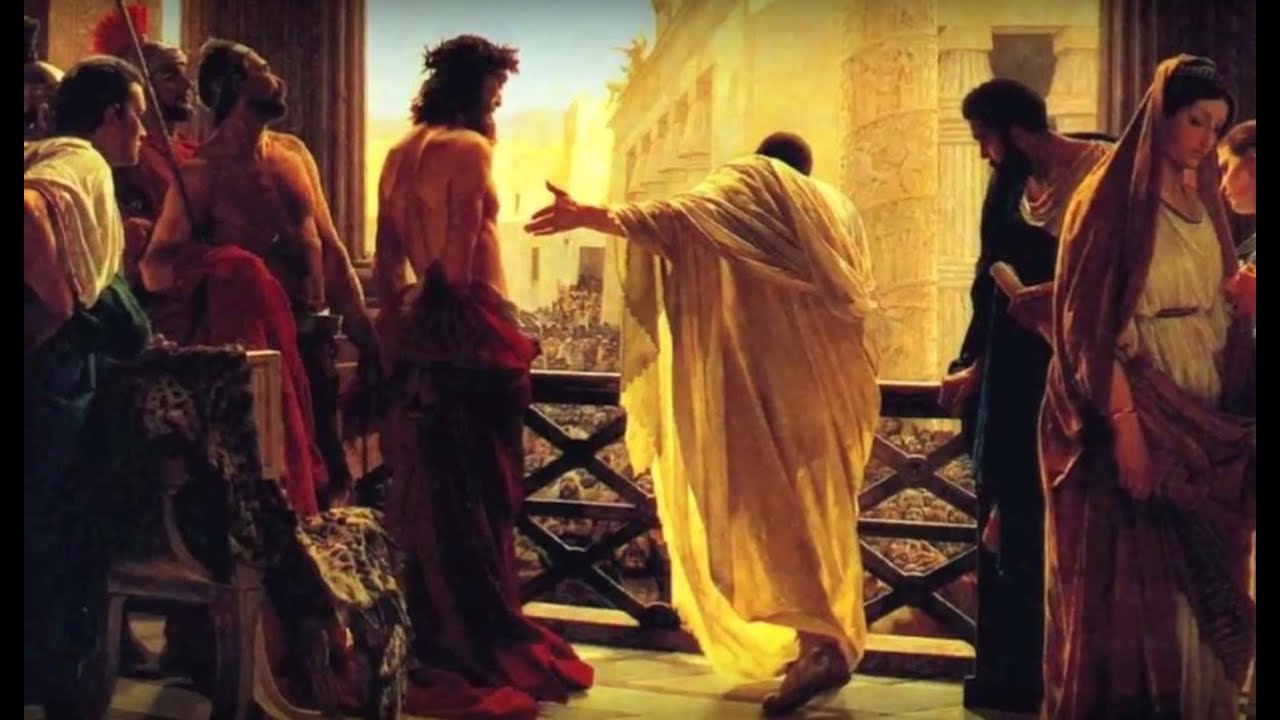
What is truth? These words were famously, or infamously, said by Pontius Pilate (John 18:38) as he washed his hands of responsibility when it came to the execution of an innocent man, Jesus of Nazareth. Pilate knew Jesus was innocent, yet he bent to the will of the people that later cried, “Crucify him….”

The truth is not often convenient or expedient. It gets in the way, and in the case of Pilate, it got in the way of his plans. God calls us (believers) to be truth-tellers. One of the most well-known chapters in the Bible is the love chapter of 1st Corinthians 13 it says of love, “It does not rejoice at wrongdoing, but rejoices with the truth.” (1 Cor. 13:6).

Truth can often be exchanged for spin. We spin the truth, or we spin a false narrative to fit our needs. We don’t want to face up to the ugliness of telling the truth, at least in its fullness, because it makes it difficult or inconvenient. There are times when it can be painful, to tell the truth, especially the whole truth and nothing but the truth.

I’ve been reading a book called A Church Called Tov[1], and tov is the Hebrew word for goodness. One aspect of creating a goodness culture in the church is to nurture truth. Truth can at times make you miserable. If we know, for example, we have to face an uncertain reaction to a situation we can choose to avoid or we can choose to confront it head-on. The confrontation with the truth is the painful part.

Scot McKnight the author says this about the truth, “And while it’s absolutely true that the truth will set you free, it’s also true it can make you miserable for a while….But here’s what I know: Truth always leads to growth and freedom on the other side.”

In February 2018, we left our former church, Grace Fellowship (church). I struggle to call it a church any longer because of the abuses and denials of those abuses that continue there. I’ve been criticized for speaking out against them and the leaders. It has in all respects been costly in countless ways, but yet it has also been liberating. We recognized how many that had left before us that we had hurt. It seemed natural to clean up those relationships. In that respect and many others, the truth sets us free.

When the women that had accused Bill Hybels of Willow Creek Church (fame) spoke up they were attacked relentlessly and went unbelieved, but they chose to speak the truth in love anyway. The public voicing of these grievances that were dismissed and rejected by Hybels and his enablers was heavily criticized. The citing of Matthew 18 is a common tactic. Michael Kruger writes of this in his book Bully Pulpit as well, as a sort of coverall for all grievances. McKnight argues, “The Bible’s language for ‘going public’ is prophetic action.” Once the sins are publicly exposed the smear campaigns usually begin.

In the case of Willow Creek, and to some degree, Harvest Bible Chapel, there was a seeming bright spot. Willow Creek addressed the issues publicly, recognized there were problems and even had a public event to attempt to “reconcile” the issues. McKnight writes,

Though they made reference to ‘unaddressed sin going on and men and women being hurt, they didn’t speak to the power dynamics that had covered up the sin or apologize for publicly and intentionally accusing the women and their supporters of collusion and lying. And they didn’t address the cultural dynamics at Willow Creek that led so many in the congregation to side with Bill Hybels against the women. Instead, they attempted to pivot to a message of reconciliation and their vision for the future—in short, let’s make up and move on. But reconciliation isn’t possible without confession and repentance.

Here is where I hope to make a point. I know of plenty of people that have left abusive churches. I talk to them frequently. Sometimes they were strictly victims in these places, and other times they were perpetrators as well as victims. They become like their teachers, in that sense, they inflict damage on others before they are enlightened about their situation.

I’ve written before on the reconciliation process, but McKnight simplifies it down to its most basic tenets, “reconciliation isn’t possible without confession and repentance.” It is my deepest desire to reconcile, confess and repent where I’ve done wrong. If I don’t know I’ve done wrong it is the responsibility of the offended party to point it out to me, in love. It is the only way forward, or we will remain stuck in our own version of the truth holding onto our pride and believing we’ve been damaged.

McKnight once again provides clarity to the situation, “As James Baldwin writes in The Price of the Ticket, ‘Whoever cannot tell himself the truth about his past is trapped in it … frequently indeed he mistakes the one for the other.’”

That is a powerful quote, and in short, what he is saying is that we can easily fool ourselves. When we fool ourselves as to our innocence, we will never see our own guilt. I don’t write this as the perfectly innocent one myself, but I write and say assuredly if I’m wrong, I desire to confess, repent and reconcile. But please show me first, and then you will have won your brother.

May the Lord help us all.

Kevin


[1] 1. Scot McKnight, Church Called Tov (Tyndale House Publishers, Inc., 2020).

Has Faith Made You Well? – Luke 8:40-56

Now when Jesus returned, the crowd welcomed him, for they were all waiting for him. And there came a man named Jairus, who was a ruler of the synagogue. And falling at Jesus’ feet, he implored him to come to his house, for he had an only daughter, about twelve years of age, and she was dying.
As Jesus went, the people pressed around him. And there was a woman who had had a discharge of blood for twelve years, and though she had spent all her living on physicians, she could not be healed by anyone. She came up behind him and touched the fringe of his garment, and immediately her discharge of blood ceased. And Jesus said, “Who was it that touched me?” When all denied it, Peter said, “Master, the crowds surround you and are pressing in on you!” But Jesus said, “Someone touched me, for I perceive that power has gone out from me.” And when the woman saw that she was not hidden, she came trembling, and falling down before him declared in the presence of all the people why she had touched him, and how she had been immediately healed. And he said to her, “Daughter, your faith has made you well; go in peace.”
While he was still speaking, someone from the ruler’s house came and said, “Your daughter is dead; do not trouble the Teacher any more.” But Jesus on hearing this answered him, “Do not fear; only believe, and she will be well.” And when he came to the house, he allowed no one to enter with him, except Peter and John and James, and the father and mother of the child. And all were weeping and mourning for her, but he said, “Do not weep, for she is not dead but sleeping.” And they laughed at him, knowing that she was dead. But taking her by the hand he called, saying, “Child, arise.” And her spirit returned, and she got up at once. And he directed that something should be given her to eat. And her parents were amazed, but he charged them to tell no one what had happened. (Luke 8:40-56).