Resolving conflicts that arise between believers in the church is outlined in Matthew 18:15-19. It is a straightforward passage that takes the Christian step by step through conflict resolution. The emphasis here is that sin is involved, or at least it is perceived to be involved. That is stated clearly in verse 15, “If your brother sins against you, go and tell him his fault, between you and him alone.” I say, “perceived” because the one receiving the going-to, may not see things in the same light. The passage continues, “If he listens to you, you have gained your brother.” Meaning, it’s all over, and once, you aired your grievance, he heard you, and you resolved the conflict.
The next step involves witnesses. I won’t outline the whole passage, but if the conflict is not solved between the two believers, we are instructed to involve others. They will help decide if there is an issue that needs adjudicating. Assuming these are non-partial, non-biased individuals it is intended to help make sense of the situation and help the sinning one see the error of his ways.
The final step says, “tell the church” And if the unrepentant does not listen to the offended brother, if he doesn’t listen to the two or three witnesses and he refuses to hear the church then he is to be as a Gentile and a tax collector. Other translations use the word “heathen,” or “pagan” in place of Gentile.
In the context of our passage in Matthew 18, the reference becomes clear that Gentiles and tax collectors are non-believers. Generally, this is a conflict between two lay people if I can use that term. The Bible provides instruction in other areas if there is a leader in sin and how to deal with him, the key text here is found in 1 Timothy 5:19 through 21. I won’t deal with that in this post because I desire to explore the concept of shunning as it relates to the end process of Matthew 18.
Specifically, I want to deal with how fundamentalist and authoritarian churches use shunning as a punishment for “wayward” church members. I have written on this topic before discussing the excommunication process that we experienced at Grace Fellowship over 5 years ago now, so I won’t rehash the same ground, but please feel free to read up on that if you are inclined, it is posted here.
Shunning is punitive for these types of “churches.” You see it in places like Mormonism, Jehovah’s Witnesses, and certainly in fundamentalism. (I’ll lump authoritarian, abusive churches under the umbrella of fundamentalism for our purposes today). The shunning plays itself out in different ways. Let’s suppose I’ve been excommunicated from a fundamentalist church like GFC (which I have). We were heavily accused of NOT practicing Matthew 18. I had four conversations with the pastor and one conversation with the elders, and I wrote an email after one of the conversations with the pastor outlining our concerns about legalism at the time before we left.
We expressed our concerns, we knew from the conversations that things would never change, we had experienced and seen far more than we needed to see that this was not a biblical church worth investing our lives and the sacrifice of our children, so we made the decision to leave. I knew it would end up where it ended up because, for countless others before us, it ended in the same way. We knew the cost. We were more than willing to pay the price, and of course, there was a price to pay.
One of those costs was being excommunicated as indicated above and the other was shunning. In the act of shunning the members are instructed they shouldn’t talk with us or have anything to do with us except for calling us to repent and encouraging us to “get right” with the church. It all seems archaic and cultic, and it is. The bigger question is it biblical? A case can be made in some respects for shunning, and I’ve written about this before in the previously linked article where in 1 Corinthians 5 the church was dealing with some gross and intentional sin.
Got Questions provides a good commentary on the act of shunning.
In any case, it would seem that extreme forms of shunning, such as considering someone “dead,” utterly ignoring him, or refusing to acknowledge his existence, go beyond what Scripture commands. After all, Jesus said that, when someone is put out of the church, he should be treated as “a pagan or a tax collector” (Matthew 18:17). In other words, treat an intractable offender as an unsaved person. How are we to treat the unsaved? With love and grace. The “pagans and tax collectors” need to be evangelized. We are to love even our enemies (Matthew 5:44).
Matthew 18 should not be used as a coverall to shun. It should be used to invite the disciplined member into a relationship with Christ. If they are Gentiles and tax collectors their greatest need is salvation, not avoidance. But there’s so much more to the topic such as the legitimacy of the discipline, the legitimacy of the pastors, and the church.
Last year we went back to Iowa for vacation and ran into a former member. We actually had a very nice and appropriate interaction with him, but we soon learned he received thirty-nine lashes for his insurrection and betrayal of his pastor for even engaging in a conversation with us without calling us to repentance and urging us to “meet with the elders” so they could beat us up a little more.
Our vacation this summer, once again, took us to Iowa. We spent a lot of years in Iowa and have a lot of friends and it is a priority to see them and maintain those relationships. Jen and I had discussed how to interact if we encounter anyone as we did last year. The approach would be the same. We want to be friendly, maintain self-control but also be willing to have a conversation. You never know when someone is considering leaving.
We did encounter one of the men in the church while we were at a restaurant. We were seated with some friends, and I saw this guy walk in and walked within a foot or so of us. I looked at him and said, “Hi, Brett (not his real name), and he looked at me, sort of grunted, and kept moving. I’ve known this guy for over fifteen years. I wouldn’t call him a friend, he never really was, but we went to two churches together and have had countless conversations. I’m sure he was caught off guard like Peter was last year. In this interaction, however, Brett didn’t engage, perhaps he knew better, perhaps the timing was bad, but if he did engage then he would then be accountable to the leaders. He would be expected to give us a metaphorical beatdown. He hung around the front of the restaurant for a few minutes as he was waiting for his carry-out order and then scooted out the door. Relieved, I’m sure, that I never approached him.
As he drove home, I’m sure he decided not to make the same mistake as Peter made last year and messaged his pastor to let him know we were around. My guess is he didn’t even tell his wife, because she’s more bought in than he is from my perception. Much like our second encounter last year he now has some plausible deniability. He handled Shunning 101 perfectly. Pretend like you don’t even know them. Avoid them. Run from them unless you are prepared to confront and call them to “repentance” for their insurrection. That is how it works, and he handled it well if you don’t want to get in trouble, and if someone finds out.
But the question comes down to Matthew 18’s design. Should we shun and avoid, I say absolutely not. There are times when putting someone out of the church or excommunicating is necessary. In my view, and I think it’s the biblical view, Matthew 18 is designed to win the brother back that has gone through the process of biblical church discipline, has committed a sin that is confirmed, and refuses to turn from it. In our case, and the case of countless others the “sin” is leaving the church. When a church lives in an authoritarian, legalistic way filled with fundamentalist culture leaving is impossible without excommunication and ultimately shunning is the result.
I’ve made this statement many times before, but the only way to leave is to leave. The shunning is meaningless to me, and it should be meaningless to anyone that has been shunned by this type of environment. It is unhealthy and toxic, and you and I deserve better. We deserve pastors and elders that love and care for the sheep just as Jesus loves and cares for us. If a group chooses to shun there is a high probability, they are a cult or at best cult-like in their tendencies. It continues to play itself out time and time again. Beware of how they operate, and you will be equipped to spot them and help warn others.
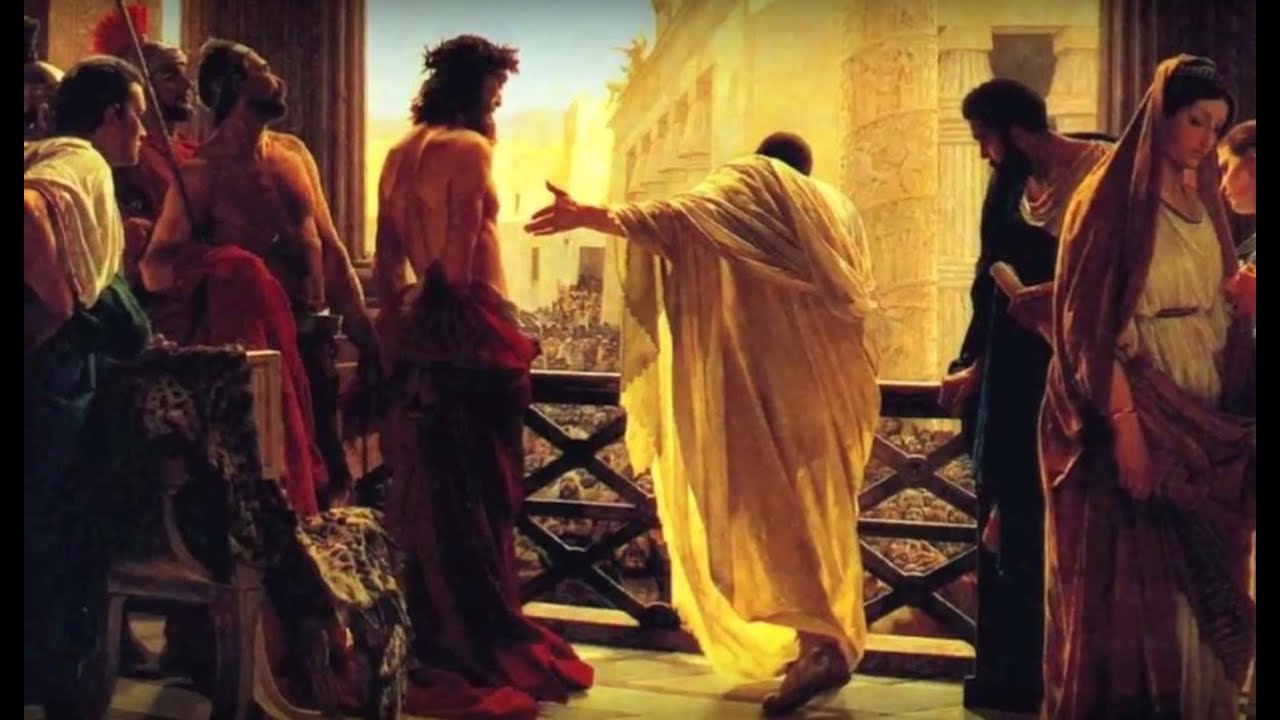
What is truth? These words were famously, or infamously, said by Pontius Pilate (John 18:38) as he washed his hands of responsibility when it came to the execution of an innocent man, Jesus of Nazareth. Pilate knew Jesus was innocent, yet he bent to the will of the people that later cried, “Crucify him….”
The truth is not often convenient or expedient. It gets in the way, and in the case of Pilate, it got in the way of his plans. God calls us (believers) to be truth-tellers. One of the most well-known chapters in the Bible is the love chapter of 1st Corinthians 13 it says of love, “It does not rejoice at wrongdoing, but rejoices with the truth.” (1 Cor. 13:6).
Truth can often be exchanged for spin. We spin the truth, or we spin a false narrative to fit our needs. We don’t want to face up to the ugliness of telling the truth, at least in its fullness, because it makes it difficult or inconvenient. There are times when it can be painful, to tell the truth, especially the whole truth and nothing but the truth.
I’ve been reading a book called A Church Called Tov[1], and tov is the Hebrew word for goodness. One aspect of creating a goodness culture in the church is to nurture truth. Truth can at times make you miserable. If we know, for example, we have to face an uncertain reaction to a situation we can choose to avoid or we can choose to confront it head-on. The confrontation with the truth is the painful part.
Scot McKnight the author says this about the truth, “And while it’s absolutely true that the truth will set you free, it’s also true it can make you miserable for a while….But here’s what I know: Truth always leads to growth and freedom on the other side.”
In February 2018, we left our former church, Grace Fellowship (church). I struggle to call it a church any longer because of the abuses and denials of those abuses that continue there. I’ve been criticized for speaking out against them and the leaders. It has in all respects been costly in countless ways, but yet it has also been liberating. We recognized how many that had left before us that we had hurt. It seemed natural to clean up those relationships. In that respect and many others, the truth sets us free.
When the women that had accused Bill Hybels of Willow Creek Church (fame) spoke up they were attacked relentlessly and went unbelieved, but they chose to speak the truth in love anyway. The public voicing of these grievances that were dismissed and rejected by Hybels and his enablers was heavily criticized. The citing of Matthew 18 is a common tactic. Michael Kruger writes of this in his book Bully Pulpit as well, as a sort of coverall for all grievances. McKnight argues, “The Bible’s language for ‘going public’ is prophetic action.” Once the sins are publicly exposed the smear campaigns usually begin.
In the case of Willow Creek, and to some degree, Harvest Bible Chapel, there was a seeming bright spot. Willow Creek addressed the issues publicly, recognized there were problems and even had a public event to attempt to “reconcile” the issues. McKnight writes,
Though they made reference to ‘unaddressed sin going on and men and women being hurt, they didn’t speak to the power dynamics that had covered up the sin or apologize for publicly and intentionally accusing the women and their supporters of collusion and lying. And they didn’t address the cultural dynamics at Willow Creek that led so many in the congregation to side with Bill Hybels against the women. Instead, they attempted to pivot to a message of reconciliation and their vision for the future—in short, let’s make up and move on. But reconciliation isn’t possible without confession and repentance.
Here is where I hope to make a point. I know of plenty of people that have left abusive churches. I talk to them frequently. Sometimes they were strictly victims in these places, and other times they were perpetrators as well as victims. They become like their teachers, in that sense, they inflict damage on others before they are enlightened about their situation.
I’ve written before on the reconciliation process, but McKnight simplifies it down to its most basic tenets, “reconciliation isn’t possible without confession and repentance.” It is my deepest desire to reconcile, confess and repent where I’ve done wrong. If I don’t know I’ve done wrong it is the responsibility of the offended party to point it out to me, in love. It is the only way forward, or we will remain stuck in our own version of the truth holding onto our pride and believing we’ve been damaged.
McKnight once again provides clarity to the situation, “As James Baldwin writes in The Price of the Ticket, ‘Whoever cannot tell himself the truth about his past is trapped in it … frequently indeed he mistakes the one for the other.’”
That is a powerful quote, and in short, what he is saying is that we can easily fool ourselves. When we fool ourselves as to our innocence, we will never see our own guilt. I don’t write this as the perfectly innocent one myself, but I write and say assuredly if I’m wrong, I desire to confess, repent and reconcile. But please show me first, and then you will have won your brother.
May the Lord help us all.
Kevin
[1] 1. Scot McKnight, Church Called Tov (Tyndale House Publishers, Inc., 2020).
Now when Jesus returned, the crowd welcomed him, for they were all waiting for him. And there came a man named Jairus, who was a ruler of the synagogue. And falling at Jesus’ feet, he implored him to come to his house, for he had an only daughter, about twelve years of age, and she was dying. As Jesus went, the people pressed around him. And there was a woman who had had a discharge of blood for twelve years, and though she had spent all her living on physicians, she could not be healed by anyone. She came up behind him and touched the fringe of his garment, and immediately her discharge of blood ceased. And Jesus said, “Who was it that touched me?” When all denied it, Peter said, “Master, the crowds surround you and are pressing in on you!” But Jesus said, “Someone touched me, for I perceive that power has gone out from me.” And when the woman saw that she was not hidden, she came trembling, and falling down before him declared in the presence of all the people why she had touched him, and how she had been immediately healed. And he said to her, “Daughter, your faith has made you well; go in peace.” While he was still speaking, someone from the ruler’s house came and said, “Your daughter is dead; do not trouble the Teacher any more.” But Jesus on hearing this answered him, “Do not fear; only believe, and she will be well.” And when he came to the house, he allowed no one to enter with him, except Peter and John and James, and the father and mother of the child. And all were weeping and mourning for her, but he said, “Do not weep, for she is not dead but sleeping.” And they laughed at him, knowing that she was dead. But taking her by the hand he called, saying, “Child, arise.” And her spirit returned, and she got up at once. And he directed that something should be given her to eat. And her parents were amazed, but he charged them to tell no one what had happened. (Luke 8:40-56).
There has been a resurgence in the study of and interest in Thomas Aquinas in recent years, especially for those who call themselves Reformed and Orthodox. Aquinas has almost exclusively been a leading theologian for Roman Catholicism, but why the renewed interest in Thomas, and what exactly did he think and teach? Aquinas represents much of what the Middle Ages stood for and taught. It was an odd period between the Early Church and the Protestant Reformation, and Thomistic thought reflects the times.
What has been considered theology in the Middle Ages is now most often categorized as philosophy, and Thomas’s writings are saturated with Aristotle’s and some of Plato’s works. To better understand Aquinas and his theology, it seems prudent to run it through a biblical lens to examine how far he took his “Natural Theology”[1] and whether natural theology and reason[2] are adequate for salvation.
This paper seeks to summarize and synthesize some of the methodologies of Thomas Aquinas as it relates to epistemology and his theology. Admittedly, that is a monumental task given the volumes of Thomas’s writings and thoughts, so the focus here will be threefold. The first is an understanding of natural reasoning, then knowledge of God, and lastly, apologetics. Having a proper anthropology and a theological framework is crucial to understanding mankind and his need for God. In the end, the only real difference the most sophisticated arguments make are those which lead to true salvation founded on the finished work of the Lord Jesus Christ. The primary questions that must flow out of “natural reason” concerns the true knowledge of the one true God and whether salvation is possible and available through these natural processes. If one is to arrive at an informed position that understands Thomistic thought and honors God through His revelation, there are serious questions to ask and answer.
[1]Brian Davies and Eleonore Stump, The Oxford Handbook of Aquinas (Oxford etc.: Oxford University Press, 2016), 4-5. “As a part of philosophy, natural theology must be based entirely on ‘principles known by the natural light of intellect,’ principles of the sort that underlie Aristotle’s metaphysics, which Aristotle himself thought of as a culminating in theology (see Aquinas’s interpretation of that thought in the prooemium to his Sententia super Metaphysiciam [Commentary on Aristotle’s Metaphysics]}.
[2] Natural theology and natural reason go hand in hand, as one bases theology on the ability to reason through natural processes, outside of regeneration, which is contradictory to the Scriptures.
Who is Thomas Aquinas, and why has his teaching and thought process remained relevant today? The Medieval Church was chaotic in its belief system as the period moved from the Early Church. Paganism, Gnosticism, and other strange thought had taken the church away from the purity of the Scriptures. Thomas was born around 1225 in or near Aquino, Italy. As a teenager, he came from a large family, went to Naples for schooling, and became involved with the newly formed Dominicans. Thomas was influenced early on and cemented a philosophical approach under a Dominican mentor named Albert the Great.
Augustine and other church fathers, such as Gregory the Great, also influenced Thomas. Thomas’s influences by these teachers were influential in his life, but one stands out as having the most profound impact, and that was Aristotle, and as K. Scott Oliphint remarks, “[F]rom which the theological notion of principium is derived.”[1] Thomas’s starting foundational structure begins with existence and knowledge, and within this framework, the primary interest is theological. Thomas built his theological structure within Aristotle’s philosophy which ultimately caused him to misunderstand the Scriptures.
James Doig writes,
The dependence of Aquinas’s theology on the philosophy of Aristotle appears then in two forms. One is the evident application of Aristotle’s doctrines or concepts; the other, not as noticeable, is the application of the method Aquinas found proper to Aristotle’s metaphysicians…One of Aquinas’s strongest convictions concerned the impossibility that error can arise from the correct use of the human cognitive abilities given by God. That the human mind is made for the world is surely everywhere evident in Aquinas’s works.[2]
Thomas was a literary giant over his years, and it is estimated that his written works are over eight million words, most of which have survived,[3] and been reproduced into many languages. The vast library of Aquinas’s works has given the modern theologian and philosopher tremendous material to sift through and analyze. Thomas’s influences require understanding, and Oliphint provides insight:
Thomas’s comments on the Sentences included around 2,000 quotes from Aristotle, 1,500 from Augustine, 500 from Denis the Areopagite, 280 from Gregory the Great, and 240 from John Damascene, as well as others. Clearly the influence of Aristotle on Thomas’s reading of church history was substantial and significant by this point in his life.[4]
Just how profound Aristotle’s influence on Thomas is visible through the volumes of expositions respecting Aristotle’s works. James Doig states, “Aquinas’s relation to Aristotle was that of a theologian to a source of philosophical doctrines and concepts with whose aid he formulated his theological synthesis of Christian revelation.”[5] In some sense, theology or biblical revelation is not enough. Aquinas offers a greater understanding or more profound knowledge, and according to Doig, “as well as recognition of the value of that thought for theology.”[6] It is essential to unfold how Aquinas had his shaping formed by Aristotle, but more importantly, how this contorted his biblical worldview. Jesus said, “A disciple is not above his teacher, but everyone when he is fully trained will be like his teacher” (Luke 6:40). Aquinas held Augustine in high regard as an authority where theology was concerned, but where he differed from Augustine as to the light of illumination needed to come to true knowledge. With that in mind, evaluating the primary areas that form the foundation of Thomistic thought is essential. Where is the dividing line between natural revelation and special revelation? Is it possible for the natural man to come to Christ through a natural process? Aquinas believed this was possible, and an appropriate starting point is in Summa Theologica,[7] arguably his most well-known work and the work that would take him right up to his death. It is not his only work; as stated previously, he wrote extensively and abundantly.
[2] Davies and Stump, “The Oxford Handbook of Aquinas,” 40-41. Herein lies a direct contradiction to the noetic effects of sin on the ability to reason properly without the intervention of Scripture as a guide.
Understanding Thomas’s view on the knowledge of God, it is imperative to grasp his mindset on natural reason. In Summa Theologica, I q. 12 a. 12 s.c., Thomas references Romans 1:19. He says, “It is written (Rom. 1:19), ‘That which is known of God,’ namely, what can be known of God by natural reason, ‘is manifest in them.’”[1] Thomas, it seems, desires to give man the benefit of the doubt and determine if he can indeed come to a knowledge of God without Divine intervention. He attempts to divide the knowledge of God’s essence from His effects.
Thomas says this about essence and effect;
Our natural knowledge begins from sense. Hence our natural knowledge can go as far as it can be led by sensible things. But our mind cannot be led by sense so far as to see the essence of God; because the sensible effects of God do not equal the power of God as their cause. Hence from the knowledge of sensible things the whole power of God cannot be known; nor therefore can His essence be seen. But because they are His effects and depend on their cause, we can be led from them so far as to know of God “whether He exists,” and to know of Him what must necessarily belong to Him, as the first cause of all things, exceeding all things caused by Him.[2]
While it is true mankind cannot know all there is to know about God, especially in His essence, God has revealed Himself through nature, as Romans 1 shows, but Thomas misses the overall point of Romans 1. Thomas takes his reasoning further by replying to the objections in Summa. “Reply to Objection 2: God is known by natural knowledge through the images of His effects.”[3] Thomas has some justification for this statement. To understand his error and where he had it partly right, an examination of Romans 1:18-23 is necessary, and it is essential to break this into a verse or two at a time to make the exegetical point required.
“For the wrath of God is revealed from heaven against all ungodliness and unrighteousness of men, who by their unrighteousness suppress the truth. For what can be known about God is plain to them, because God has shown it to them”[4] (Rom. 1:18-19).
Paul begins with the powerful statement, “the wrath of God is revealed,” and it is revealed against ungodliness and unrighteousness. Understanding Paul’s purpose for such a bold statement begins with grasping verses 16 and 17, where he explains why. The gospel is the power of God for salvation. Verse 17 informs the reader that this reveals the righteousness of God, and it comes through faith. Mounce says, “The gospel reveals a righteousness of God that is distinct from human righteousness.”[5] Paul sets the table, saying that you cannot come to God outside of faith in Christ. God’s wrath is reserved for the ungodly, and it culminates in a false knowledge of God through suppression of the truth.
Thomas errs when he thinks that God showing it to them is a universal revelation of God’s goodness toward mankind in his free offer of salvation. While on the one hand, God does reveal Himself to mankind, but the purpose is to eliminate any excuses. Paul writes, “For what can be known about God is plain to them,” and at the end of verse 20, “So they are without excuse.” Why is it plain to them, and why are they without excuse? This is because they “by their unrighteousness suppress the truth.” The suppression of truth is how the unrighteous justify their denial of God and continue living according to their wicked hearts’ dictates. Mounce provides clarity on the suppression of truth,
The people of whom Paul spoke were those who by their wicked and sinful lives “suppress the truth.” Truth cannot be changed, but it can be held down or stifled. Wickedness “denies … truth its full scope” (Knox). We will learn in the verses that follow that God has revealed to all humans something of his eternal power and nature. Yet people refuse to believe, and as a result their understanding is darkened. To turn willfully against God is to move from light into darkness. The blindness that follows is self-imposed.[6]
Continuing through the passage, Paul is metaphorically tightening the noose around the neck of the unbelieving skeptic who claims there is no god. If Thomas sought consistency in his hermeneutical methodology by utilizing the scripture interpretation principle, he would have spent time examining an overall biblical theology on man’s inability outside of regeneration. Thomas understood there was a relationship between God’s grace and spiritual understanding, regeneration, and intellectual knowledge. Perhaps he was more inclined toward a type of prevenient grace. Oliphint quotes Thomas from The Summa Contra Gentiles, “Now in those things which we hold about God there is truth in two ways (duplex Veritatis modus). For certain things that are true about God wholly surpass the capability of human reason….”[7] In contrast, Calvin understood the need for Divine grace. Calvin writes;
Whereas something of the natural gifts of understanding, judgment and will “remain as a residue,” the supernatural gifts of faith, love and holiness were “taken away” when Adam sinned. This does not mean, however, as the Scholastics maintained, that the natural gifts (e.g., the remnants of man’s understanding) are so sufficiently intact that man is able to stir himself up to seek the grace of God. Rather, his mind is “plunged into deep darkness” and his will is “so bound to wicked desires that it cannot strive after the right.” Divine grace is absolutely necessary for the restoration of even these natural gifts.[8]
Calvin understood the correct relationship between man’s natural ability to discern, “there is a God,” but did not assign too much credit to man that he might ascend to God. Paul continues in verse 21 with the difference between knowing God and not honoring Him. Honor is ascribed to glory and honor, giving thanks to God, and natural man does not have this desire, as Calvin maintains, and the scriptures confirm, “their foolish hearts were darkened” (Rom. 1:21).
Man’s knowledge of God is limited in its scope due to the inherent nature of sin, known as the noetic effect. When God told Adam that if he ate from the tree of the knowledge of good and evil, he would surely die (Gen. 2:17), he died spiritually the day he ate. Paul reminds his readers that according to Ephesians 2:1, that man is dead in his sins and transgressions, and proper anthropology is critical for understanding God. The deadness Paul describes is the spiritual death of Genesis and to all of Adam’s posterity.
Based on his natural theology, Thomas Aquinas uses an Aristotelian framework to understand and prove God’s existence. In Summa Theologica, Thomas uses Question 2 and Question 3 to provide his arguments for the existence and simplicity of God. Thomas uses five proofs, commonly referred to as, The Five Ways, for the existence of God. Whether Thomas is trying to prove the Christian God, or some generic “higher power” is often debated but makes all the difference in the ultimate sense. What is meant here, by ultimate sense, is the determining factor of eternality for the human soul. If Thomas successfully convinces someone of the existence of God or a god, it matters very little in the end if they don’t receive the One True God unto salvation. Thomas’s teaching and philosophical framework are dangerous to orthodox Christianity, especially from an apologetic argument. Apologetics will be the final topic for discussion. The first three proofs of the five will be discussed in this paper.
The First Way is what Aquinas called “the most manifest” and is often considered the best of the arguments for the existence of God. The basic premise states that there is something that moves things, but that thing itself is unmoved, and additionally, the unmoved mover causes all things but itself to be uncaused. Oliphint summarizes how Aquinas borrows this concept from Aristotle, “Thus, the argument borrowed by Aquinas from Aristotle is in the latter’s Physics, not his Metaphysics. Aquinas, however, seems to be arguing from the perspective of being itself, and only doing so is he able to conclude with the assertion that there is an Unmoved Mover.”[1]
On the surface, this seems to be a reasonable argument for the existence of God. Ultimately, something must have caused all things to come into existence, and is it logical that this primary cause is God? Yes, that makes the most sense for the already-convinced Christian, but it regretfully leaves out an essential element of the Christian faith: special revelation. Summarizing the weaknesses of Thomistic thought through his neglect of biblical revelation to root and ground his arguments is possible. If Thomas uses revelation, it is a backup to natural reasoning or a second level of understanding. In other words, special revelation is relevant but serves a different purpose.
The Apostle Paul argues differently; in his example, those seeking wisdom would do well to imitate. “And Paul went in, as was his custom, and on three Sabbath days he reasoned with them from the Scriptures” (Acts 17:2). Paul does not utilize natural theology to win the Jews. He reasons from the Scriptures. One could argue that it employed different methods for different audiences, and in a way, Paul utilized a different tactic, but it still landed in the same place. When Paul was in Athens, the text says in verse 17, “So he reasoned in the synagogue with the Jews and the devout persons, and in the marketplace every day with those who happened to be there” (Acts 17:17). When Paul gains the attention of the philosophers they say, “He seems to be a preacher of foreign divinities” – because he was preaching Jesus and the resurrection” (Acts 17:19). While it would seem prudent for Paul to go from natural reasoning to the Scriptures, he first reasons from the Scriptures, then inserts the poets and philosophers and back to the resurrected Christ as the cornerstone of his argument. A biblical understanding of the existence of God is foundational to the correct knowledge of God, not just about God. The weakness in Thomas’s approach is that he neglects the primary source of God’s revelation as being superior to all others, and not only superior but nothing can be known for sure without it.[2] The Scriptures are the foundation of truth and the only infallible and steady anchor by which God has definitively revealed himself.
In his second way, Thomas uses a similar argument to the first, but rather than motion, he uses causation. If something is, it is because it was caused by something else. The problem here could be an infinite regress, where it never ends, and there is never an ultimate cause, but Thomas recognizes this as a problem and says there must be an uncaused causer, to continue the similar language of the first way. The problems with this are identical to the issues with the first way and ultimately come back to the denial of Scripture as the first and final authority of truth.
Oliphint summarizes the first, second, and third ways of Aquinas, “all of which can be grouped as ‘cosmological arguments.’”[3] One can never achieve solid footing with this argument; it depends on human reasoning and understanding to conclude, and one is left to ask, “How do you know?”[4] Where, or what is the source material that has authority over human reason, or is human reason the highest authority? In a battle for the truth, it does little good to concede biblical revelation for a form of lesser knowledge, and if the “sword of the Spirit, which is the word of God” (Eph. 6:17), truly is the sword, then why put away the sword?
[2] The argument here is that the atheist uses borrowed capital to reason against the god they do not believe in, but without an absolute source of truth nothing can be known for certain.
The simplicity of God is less than simple, but, Thomas’s understanding is complex and nuanced in many ways. Eleonore Stump says, “[T]he doctrine is central to his philosophy and theology.”[1] Breaking it down into three parts simplifies Aquinas’s understanding of simplicity. Stump provides a succinct definition of the three claims,
(1) It is impossible that God have any spatial or temporal parts that could be distinguished from one another as here rather than there or as now rather than then.
(2) It is impossible that God have any intrinsic accidental properties.
(3) Whatever can be intrinsically attributed to God must in reality just be the unity that is his essence.[2]
What exactly is God, and how and what is He made from? The question boils down to His essence and being, defined using the Latin terms id uod est (essence) and esse (being). Aquinas categorizes these differences by saying that essence is concrete and particular, whereas being is not. The problems regarding Thomas’s view of God’s essence and being are abundant. He struggles to understand the relationship between these two. Oliphint summarizes, “But, given Thomas’s distinction between an esse and an id quod este—where the former is always and only abstract and the latter is always and only concrete—it may appear that ‘Aquinas is willing to violate the laws of logic as regards to God.’ He is positing that two incompatible properties are actually identical…It is at this point that Stump invokes the notion of quantum metaphysics.”[3] Stump uses the example of this concept and says there are scriptural texts that say, “God is love,” but also, at times, “God is loving.” In abstract terms, God is love (abstract – esse) or loving (concrete – id quod este). Thomas says in Summa Theologica, “With regard to what God himself is (secundum rem), God himself is neither universal nor particular.”[4] Stump goes on to say that care must be given when making claims about God and that it is acceptable to say he is, esse, but equally true is that he is, id quod est.
Once again, Thomas’s philosophical undergirding continues to cause issues with his theological understanding. The writers of the Westminster Confession of Faith and, subsequently, the 2nd London Baptist Confession of Faith begin with a triune understanding of God in his essence and being. “The Lord our God is but one only living and true God; whose subsistence is in and of Himself, infinite in being and perfection; whose essence cannot be comprehended by any but Himself;”[5] The starting point for theology proper begins with the Scriptures, of which the confession clings. The Reformers had the advantage of a more developed and robust theology, but they all had the Scriptures, and here is or should always be the beginning point for theology.
Oliphint rightly makes this point clear,
If we begin with biblical revelation, however (something that Thomas’s natural theology cannot do) we can begin with, instead of categories of esse and id quod est, the one essence of God as three hypostases, or subsistences. In other words, we can begin, contrary to Aquinas, with the ontological Trinity. With these biblical categories in view, we are able to affirm both that God’s essence is who he is and that there is no possibility that he could be otherwise, and that each of the three subsistences of the Godhead can and does act as that one essence.[6]
A prominent and consistent error in Thomas’s theological structure appears to be his dependence or preference toward a philosophical framework buttressed by natural theology. Theology students cannot ignore his insights and the sheer volume of work, but they require an examination through a robust biblical theology. This matter is of the utmost importance for the last topic, apologetics. Souls are at stake in a gospel presentation, and one rooted in natural theology is not built on the rock of Christ but on human wisdom and philosophy.
[1] Davies and Stump, “The Oxford Handbook of Aquinas,” 135.
The last area this paper seeks to explore is apologetics and how Thomas’s theology affects the defense of the faith. As previously noted, the primary error in Thomas’s theology is that he builds on theological sand rather than the rock of Christ. He fails to build around the word of God but instead places more emphasis on philosophy and natural reason. The most notable evidence of this thinking is revealed in his, Five Ways to prove the existence of God, and as commented on above, demonstrating God’s existence through these ideas is reasonable for the convinced Christian. However, the downside is that it is unlikely to convince the unbeliever to surrender his life to Christ based upon these proofs. Jesus said, “And when he comes, he will convict the world concerning sin and righteousness and judgment” (John 16:8), referring to the Holy Spirit. The Spirit convicts of sin impending judgment and how to be reconciled to God through Christ’s righteousness. The mind is not only incapable of understanding and surrendering to Christ, but it is also unwilling. The natural man will never come to Christ of his own free will because his free will is corrupt according to his nature in Adam. He is, as Paul says, a slave to unrighteousness. (Rom. 6:16).
Norman Geisler argues that Aquinas understood the noetic effect of sin, and the critics of Thomas misunderstood his intentions. He writes,
There is another widely held but mistaken view that Aquinas believed the mind was only finite but not fallen. This is contrary to his clear statement that “the mind of man falls far short when it comes to the things of God. Look at the philosophers; even in searching into questions about man they have erred in many points and held contradictory views. To the end, therefore, that a knowledge of God, undoubted and secure, might be present among men, it was necessary that divine things be taught by way of faith, spoken as it were by the Word of God who cannot lie.” For “the searching of natural reason does not fill mankind’s need to know even those divine realities which reason could prove. Belief in them is not, therefore, superfluous. Aquinas asserted emphatically that: “human reason is very deficient in things concerning God. A sign of this is that philosophers, in their inquiry into human affairs by natural investigation, have fallen into many errors, and have disagreed among themselves.[1]
A difficulty in discerning Thomas’s intent is using certain types of language with different interpretations as to the actual meaning. When Thomas says, “the mind of man falls far short when it comes to the things of God,” what exactly does he mean? Is he referencing Romans 3:23, “For all have sinned and fall short of the glory of God,” or does he believe that man can work himself up to the right standing with God, as was a common philosophy in the Middle Ages? Despite Geisler’s protests, what is more, convincing is how Thomas’s overall worldview and his misunderstanding of certain Scriptures point to a misunderstanding of the gospel.
Cornelius Van Til uses the pedagogy of Mr. Black, Mr. White, and Mr. Grey to provide examples of different types of evangelism methodology. Van Til’s understanding of Christianity is founded firmly in the truth of Scripture, and he writes, “True, Christianity is in accord with the moral nature of man. But this is so only because the moral nature of man is first in accord with what the Bible says it is, that is, originally created perfect, but now wholly corrupted in its desires through the fall of man.”[2] Here is the starting point for proper apologetics and it affirms the weakness in the approach Aquinas appears to prefer. Van Til gives more evidence of his methodology here,
Mr. White claims that I am a creature of God. He says that all facts are made by God and controlled by the providence of God. He says that all men have sinned against God in Adam their representative. He adds that therefore I am spiritually blind and morally perverse. He says all this and more on the basis of the absolute authority of Scripture. He would interpret me, my facts, and my logic in terms of the authority of that Scripture. He says I need this authority. He says I need nothing but this authority. His Scripture, he claims, is sufficient and final. And the whole thing is clear.[3]
Van Til’s message here is a clear and articulate gospel presentation. He defines the necessity of Scripture to defend the faith and proclaim man’s need for salvation in Christ. His work here is masterful and contrasted with Aquinas’s; it leaves this writer with little doubt about the superior method to employ. It does not diminish Thomas’s contribution to Christianity as a whole. Even with a mediocre or bad apologetic, Aquinas’s volume of work offers value in many areas, but when directly applying the gospel to lost souls, a Reformed and presuppositional approach is superior.
Van Til continues to set the standard by which apologetics should be defined, and that is not to say that Van Til was anything more than a man capable of error. It is to say that he was saturated with divine knowledge obtained through the Scriptures. In comparison to Thomas, there is no comparison. Van Til writes,
He now saw clearly first that the arguments for the existence of God as conducted by Mr. Grey are based on the assumption that the unbeliever is right with respect to the principles in terms of which he explains all things. These principles are: (a) that man is not a creature of God but rather is ultimate and as such must properly consider himself instead of God the final reference point in explaining all things; (b) that all other things beside himself are non-created but controlled by chance; and (c) that the power of logic that he possesses is the means by which he must determine what is possible or impossible in the universe of chance.[4]
The differences in a Thomistic approach compared to Van Til is quite stark, and it is not easy to draw positive conclusions from Thomas. The philosophy of natural reason is problematic when seeking to win the lost to Christ, where a biblical approach is far better.
In a modern context, it is often difficult to reconcile the practices of the day that occurred in a time such as Medieval History. Thomas Aquinas typifies the mindset and teaching pervasive in the period. While he is a worthwhile study, the Scriptures provide the filter to view Thomas for those in the Reformed camp. The movement to push Thomistic teaching into the mainstream must be critiqued and evaluated, never taken for granted, and accepted as orthodox.
God has not left the world without direction. These directions lead to the cross of Christ, whether in the Old or the New Testaments. The cross and the gospel are the central themes of God’s design to bring glory to Himself. God has declared the answer, found in the work and person of Jesus Christ. It is the critical work of the exegete of God’s word to root out these gospel jewels for the edification and benefit of the hearer, to proclaim with joy that salvation is of the Lord.
The Medieval Church may be the least understood of those in church history. In today’s world, it seems to carry little significance or value. It was a world in tremendous flux and upheaval as Christianity sought to find itself. The Medieval Church is precariously situated between the Early Church and the Protestant Reformation. Even in the turmoil of the time and an uncertain future, the Sovereign Hand of God was at work.
Roman Catholicism had a stranglehold on Christianity, but more specifically on the people of Christianity. The abuses were abundant, and the characters animated. Among them comes a man that would work toward addressing the abuses and begin his version of a reformation. Innocent III was this man.
This paper seeks to address Innocent III’s practical and doctrinal advance of the Papacy and to gain a deeper understanding of how Innocent III has shaped modern-day Catholicism for the better or, the worse, depending on one’s view. No matter the view, without a doubt, this man impacted the Medieval world and those that would follow in his footsteps.
Background
Tumultuous times often bring forth visionary rulers, and Innocent III was such a man. He is often and regularly regarded as the most influential Pope of the Medieval period. Born Lotario de’ Conti in 1160 or 1161, he was the son of Count Trasimund and the nephew of Clement III. He received his early education in Rome and studied law at Bologna. Lotario also had a keen interest in theology and studied in Paris, where he proved himself well-respected in the discipline of theology.
Lotario obtained various positions within the church after his return to Rome in 1181, including the role of sub-deacon and later Cardinal-Deacon of St. George in 1190. On January 8, 1198, Pope Celestine II died, and Lotario de’ Conti was elected the next Pope, he was only thirty-seven years of age at the time. Reluctantly, he accepted and was named Innocent III. Innocent would not allow his reluctance to become timidity. He quickly began to implement changes to the Empire. Changes that were necessary and would change the Empire’s course of history.
Mark Galli and Ted Olsen commenting on Innocent:
Innocent was born to rule; he was exceptionally gifted in intellect, will, and leadership. He was the foremost church lawyer of the age. Still, he had a combative spirit and was prone to fits of depression. He began his reign by purging church officials not loyal to him and by curbing excesses of his own household. Plates of gold were exchanged for wood, and nobles from royal families were replaced by monks. He reasserted control over the papal estates, though after an attempt on his life, he gave his family charge of key cities.[1]
A Vision for the Empire
Innocent III had an extremely high view of his office, shaping his leadership style and vision for the Empire. He believed himself as the successor of Peter, a direct representative of Christ. Innocent III exclusively took on the title Vicar of Christ, and according to Catholic Answers, “Innocent III appeals for his power to remove bishops to the fact that he is Vicar of Christ (cap. “Inter corporalia”, 2, “De trans. ep.”).”[1] Innocent’s vision for the Empire was complete control and expansion beyond Rome.
He believed his office that of a semi-Divine status, and he said, “Verily the representative of Christ, the successor of Peter, the anointed of the Lord, the God of Pharaoh set midway between God and man, below God but above man, less than God but more than man, judging all other men, but himself judged by none.”[2] Innocent’s thinking, leadership skill, and desire to control set the stage for a spiritual conquest while providing for and showing respect for the authority of kings and rulers. Innocent III was a unique and exciting ruler and largely considered his time the height of the Papacy.
Initial Conquest
In 1197 Henry VI died, and there was no immediate successor. Innocent III took this opportunity to restore papal power in Rome and the States of the Church, representing the lands and revenues associated with those lands. Given that the rest of Italy had grown weary of German invasions, Innocent quickly extended his power over all of Italy.
It was not long before Germany became an area of interest as there were two claimants to the German throne, and Innocent sided with Otto IV. The Catholic Encyclopedia provides more details:
Offended at what they considered an unjust interference on the part of the Pope, the adherents of Philip sent a letter to him in which they protested against his interference in the imperial affairs of Germany. In his answer Innocent stated that he had no intention of encroaching upon the rights of the princes, but insisted upon the rights of the Church in this matter. He emphasized especially that the conferring of the imperial crown belonged to the Pope alone.[1]
Innocent was also active in France and England. He considered one of his duties to rule not only the church but the entire world. In today’s vernacular, he might be regarded as not only a Christian Nationalist but a Christian Internationalist. Innocent continued to expand his influence over nations and princes. He was determined to know and investigate whether a king was worthy of his crown, and his office would oversee the installment to these offices.
Innocent affected nearly every country in Europe. His authority extended far and wide:
There was scarcely a country in Europe over which Innocent III did not in some way or other assert the supremacy which he claimed for the Papacy. He excommunicated Alfonso IX of Leon, for marrying a near relative, Berengaria, a daughter of Alfonso VIII, contrary to the laws of the Church, and effected their separation in 1204. For similar reasons he annulled, in 1208, the marriage of the crown-prince, Alfonso of Portugal, with Urraca, daughter of Alfonso of Castile.[2]
In November of 1209, Innocent III excommunicated King John of England. The excommunication came over a dispute regarding the appointment of a new Archbishop of Canterbury. John was upset that he had not been consulted, and the controversy lasted for over four years. Ultimately, John went to Rome to bow at the feet of Innocent III, and Innocent showed his power, and the expansion of papal influence grew.
World Domination
Pope Innocent III also viewed his role as a defender of the Catholic faith and a fighter against heresy. The Albigenses were also referred to as the Cathari or the Cathars. The Albigenses despised Roman Catholicism and saw the church as immoral and corrupt. Due to their promotion of itinerant preachers, the Roman Church saw this as a threat to their power and authority, and Innocent took up the charge to rid the world of the Cathar heresy. Not only was it one of the bloodiest of Innocent’s Crusades it eventually led to The Inquisition, which oversaw the death and torture of many. Countless Albigenses were killed for their faith in these crusades, “More than 15,000 peasants were slaughtered in one town alone.”[1]
Innocent III also sought to restore the Holy Land. The Catholic Encyclopedia states, “Innocent had at heart the recovery of the Holy Land, and for this end undertook the Fourth Crusade.”[2] The Holy Land’s conquest and restoration were a high priority during Innocent’s tenure as Pope. Despite his great efforts, The Fourth Crusade fell short of its fund-raising goals, and the crusade suffered, never making its destination. The crusade turned to Constantinople, much to Innocent III’s dissatisfaction, and rather than strengthening Christianity, the Eastern Church was left vulnerable and further divided from the West.
Church Reformation
Innocent III desired to reform the church at a time when it saw the eruption of sects and schisms due to church corruption. Innocent recognized the need to change and implemented it on a massive scale. He saw the excesses in luxurious living and drunken carousing and promoted honesty in the church’s practices.
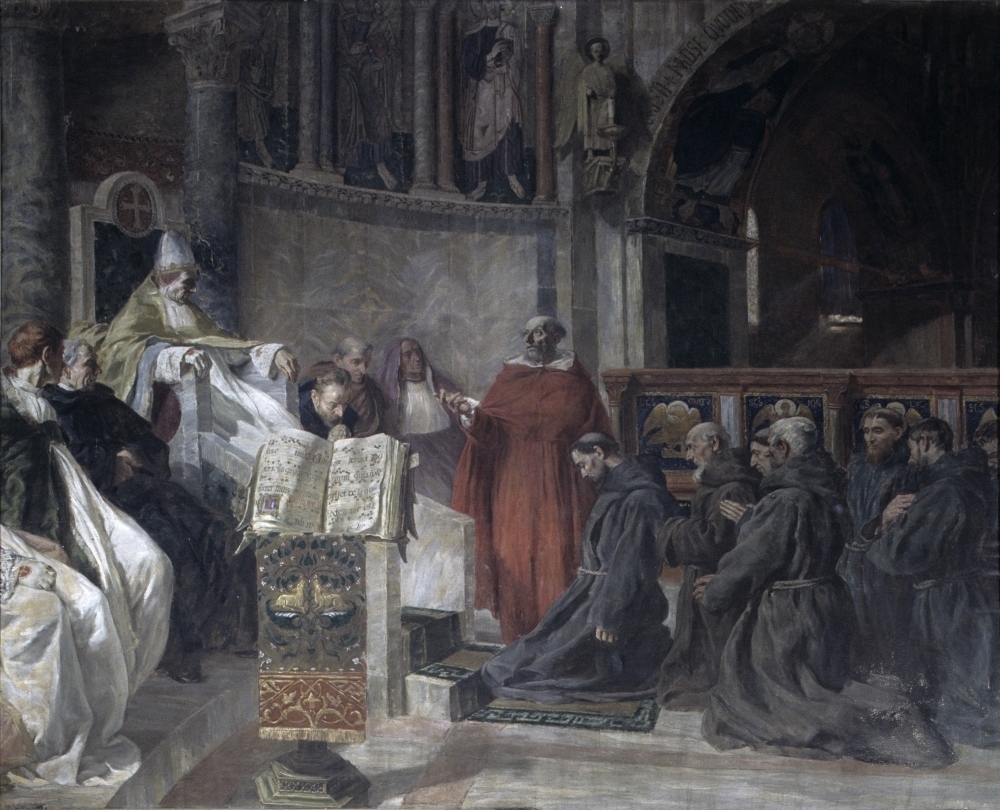
During his reign, he recognized and gave patronage to two newly established reform groups, the Franciscans and the Dominicans. He issued over 6,000 decrees and formalized many of his reforms with the Fourth Lateran Council—where the term “transubstantiate” (meaning, the bread of Communion becomes the real body of Christ) was first officially used.[1]
Whether Innocent’s reforms are considered a success today is often in the eye of the beholder, but history reveals there is little doubt he was one of the most significant figures in Medieval Church, and Roman Catholic History. Innocent III sought to make changes and changes he did make.
Conclusion
In a modern context, it is often difficult to reconcile the practices of the day that occurred in a time such as Medieval History. Innocent III sought to grow the Christian Empire, which came at a price for many. He also sought to gain not only ecclesiastical power but political power, bringing much-needed reform to the church. According to The Catholic Encyclopedia, “The labours of Innocent in the inner government of the Church appear to be of a very subordinate character when they are put beside his great politico-ecclesiastical achievements which brought the papacy to the zenith of its power.”[1] Innocent III was a power broker in almost every sense of the concept. He sought to expand and reform the Catholic Church and snuff out what he deemed heretical movements. Innocent III was a mover, a shaker, and an entrencher of the Papacy in every real sense of the phrase.
Galli, Mark, and Ted Olsen. 131 Christians Everyone Should Know. Nashville, TN: Broadman & Holman, 2000.
Ott, Michael, “Pope Innocent III,” in The Catholic Encyclopedia: An International Work of Reference on the Constitution, Doctrine, Discipline, and History of the Catholic Church, ed. Charles G. Herbermann et al. (New York: The Encyclopedia Press; The Universal Knowledge Foundation, 1907–1913.
[1] Michael Ott, “Pope Innocent III,” in The Catholic Encyclopedia: An International Work of Reference on the Constitution, Doctrine, Discipline, and History of the Catholic Church, ed. Charles G. Herbermann et al. (New York: The Encyclopedia Press; The Universal Knowledge Foundation, 1907–1913).




 Uncommon Faith