
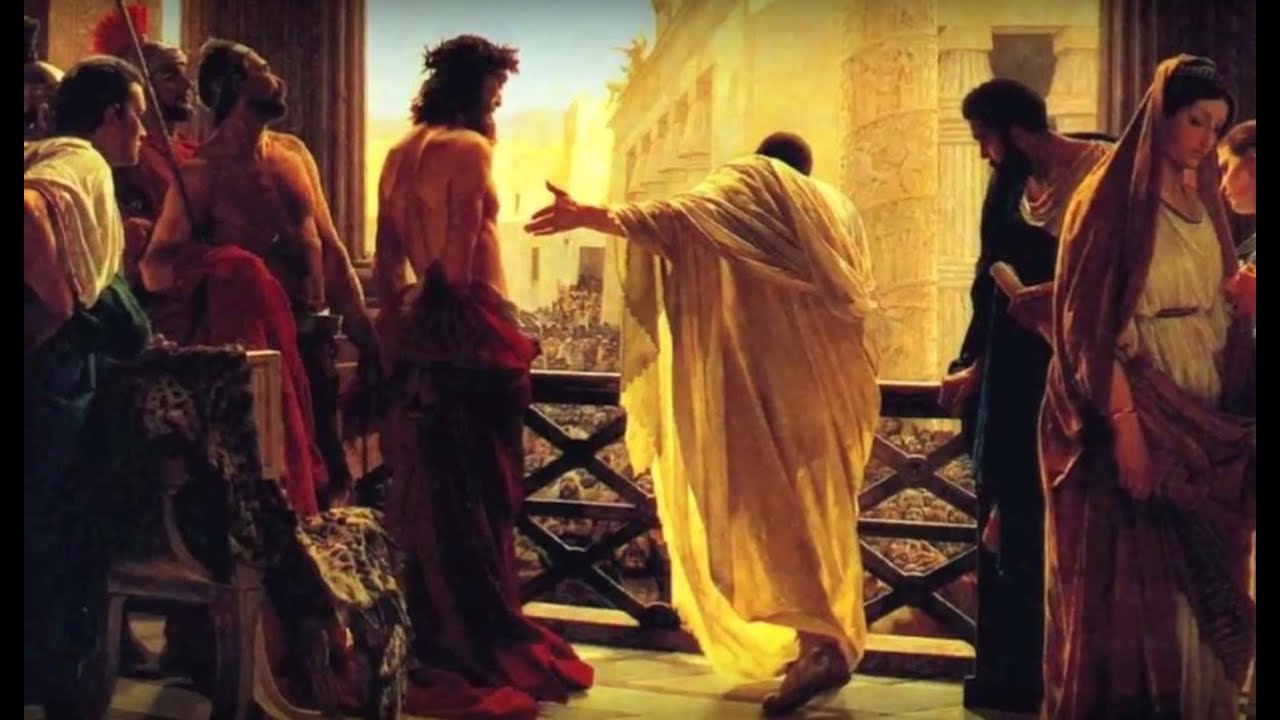
What is truth? These words were famously, or infamously, said by Pontius Pilate (John 18:38) as he washed his hands of responsibility when it came to the execution of an innocent man, Jesus of Nazareth. Pilate knew Jesus was innocent, yet he bent to the will of the people that later cried, “Crucify him….”
The truth is not often convenient or expedient. It gets in the way, and in the case of Pilate, it got in the way of his plans. God calls us (believers) to be truth-tellers. One of the most well-known chapters in the Bible is the love chapter of 1st Corinthians 13 it says of love, “It does not rejoice at wrongdoing, but rejoices with the truth.” (1 Cor. 13:6).
Truth can often be exchanged for spin. We spin the truth, or we spin a false narrative to fit our needs. We don’t want to face up to the ugliness of telling the truth, at least in its fullness, because it makes it difficult or inconvenient. There are times when it can be painful, to tell the truth, especially the whole truth and nothing but the truth.
I’ve been reading a book called A Church Called Tov[1], and tov is the Hebrew word for goodness. One aspect of creating a goodness culture in the church is to nurture truth. Truth can at times make you miserable. If we know, for example, we have to face an uncertain reaction to a situation we can choose to avoid or we can choose to confront it head-on. The confrontation with the truth is the painful part.
Scot McKnight the author says this about the truth, “And while it’s absolutely true that the truth will set you free, it’s also true it can make you miserable for a while….But here’s what I know: Truth always leads to growth and freedom on the other side.”
In February 2018, we left our former church, Grace Fellowship (church). I struggle to call it a church any longer because of the abuses and denials of those abuses that continue there. I’ve been criticized for speaking out against them and the leaders. It has in all respects been costly in countless ways, but yet it has also been liberating. We recognized how many that had left before us that we had hurt. It seemed natural to clean up those relationships. In that respect and many others, the truth sets us free.
When the women that had accused Bill Hybels of Willow Creek Church (fame) spoke up they were attacked relentlessly and went unbelieved, but they chose to speak the truth in love anyway. The public voicing of these grievances that were dismissed and rejected by Hybels and his enablers was heavily criticized. The citing of Matthew 18 is a common tactic. Michael Kruger writes of this in his book Bully Pulpit as well, as a sort of coverall for all grievances. McKnight argues, “The Bible’s language for ‘going public’ is prophetic action.” Once the sins are publicly exposed the smear campaigns usually begin.
In the case of Willow Creek, and to some degree, Harvest Bible Chapel, there was a seeming bright spot. Willow Creek addressed the issues publicly, recognized there were problems and even had a public event to attempt to “reconcile” the issues. McKnight writes,
Though they made reference to ‘unaddressed sin going on and men and women being hurt, they didn’t speak to the power dynamics that had covered up the sin or apologize for publicly and intentionally accusing the women and their supporters of collusion and lying. And they didn’t address the cultural dynamics at Willow Creek that led so many in the congregation to side with Bill Hybels against the women. Instead, they attempted to pivot to a message of reconciliation and their vision for the future—in short, let’s make up and move on. But reconciliation isn’t possible without confession and repentance.
Here is where I hope to make a point. I know of plenty of people that have left abusive churches. I talk to them frequently. Sometimes they were strictly victims in these places, and other times they were perpetrators as well as victims. They become like their teachers, in that sense, they inflict damage on others before they are enlightened about their situation.
I’ve written before on the reconciliation process, but McKnight simplifies it down to its most basic tenets, “reconciliation isn’t possible without confession and repentance.” It is my deepest desire to reconcile, confess and repent where I’ve done wrong. If I don’t know I’ve done wrong it is the responsibility of the offended party to point it out to me, in love. It is the only way forward, or we will remain stuck in our own version of the truth holding onto our pride and believing we’ve been damaged.
McKnight once again provides clarity to the situation, “As James Baldwin writes in The Price of the Ticket, ‘Whoever cannot tell himself the truth about his past is trapped in it … frequently indeed he mistakes the one for the other.’”
That is a powerful quote, and in short, what he is saying is that we can easily fool ourselves. When we fool ourselves as to our innocence, we will never see our own guilt. I don’t write this as the perfectly innocent one myself, but I write and say assuredly if I’m wrong, I desire to confess, repent and reconcile. But please show me first, and then you will have won your brother.
May the Lord help us all.
Kevin
[1] 1. Scot McKnight, Church Called Tov (Tyndale House Publishers, Inc., 2020).
 Uncommon Faith
Not a fan of McKnight, but good post.
Thank you brother. Yes, McKnight has some theology that is not in line with my own, but the book was helpful to me. I appreciated the overall message.